Showing posts with label Java Ixora. Show all posts

Saturday, April 9, 2011

The Start of a Fair Trade Movement in Yogyajakarta!


When Research turns to Opportunity

Yogyakarta, Indonesia is on the international news every once in a while when Mt. Merapi threatens local inhabitants with another volcanic eruption. However, outside of this Yogya is a laid-back city that has the charm and atmosphere of a small town. When I arrived, I was in search of four Fair Trade Organizations (FTOs) based there in hopes of meeting their producers and gauging the impact Fair Trade has had in Javanese communities. However, an unexpected opportunity arose.

If Jakarta is the center of political power in Indonesia, Yogya is the center of academia. Home to one hundred and twenty-two universities with tens of thousands of students from all across the archipelago, Yogya represents nothing less than the future of the country. I can imagine no better place for FTOs to be centered. When I first learned of the existence of so many colleges, my first comment was, “Great!! How many campuses have Fair Trade Movements?” 

Much to my surprise, the answer was: None. 

I had just spent six weeks researching and learning about the strategies and plans of the Fair Trade Movement of the Philippines; it was time to share the lessons I had learned. After interviewing the Directors of three FTOs and on the way to meet their producers in surrounding rural communities, I began talking with them about the strategies of the WFTO – Philippines and lessons learned in cities such as Cebu which is expanding Fair Trade Movements on university campuses. I had separate discussions with each Director and they always came to the same conclusion: we began exploring numerous possibilities for the creation of a local Fair Trade Movement in Yogyakarta. 

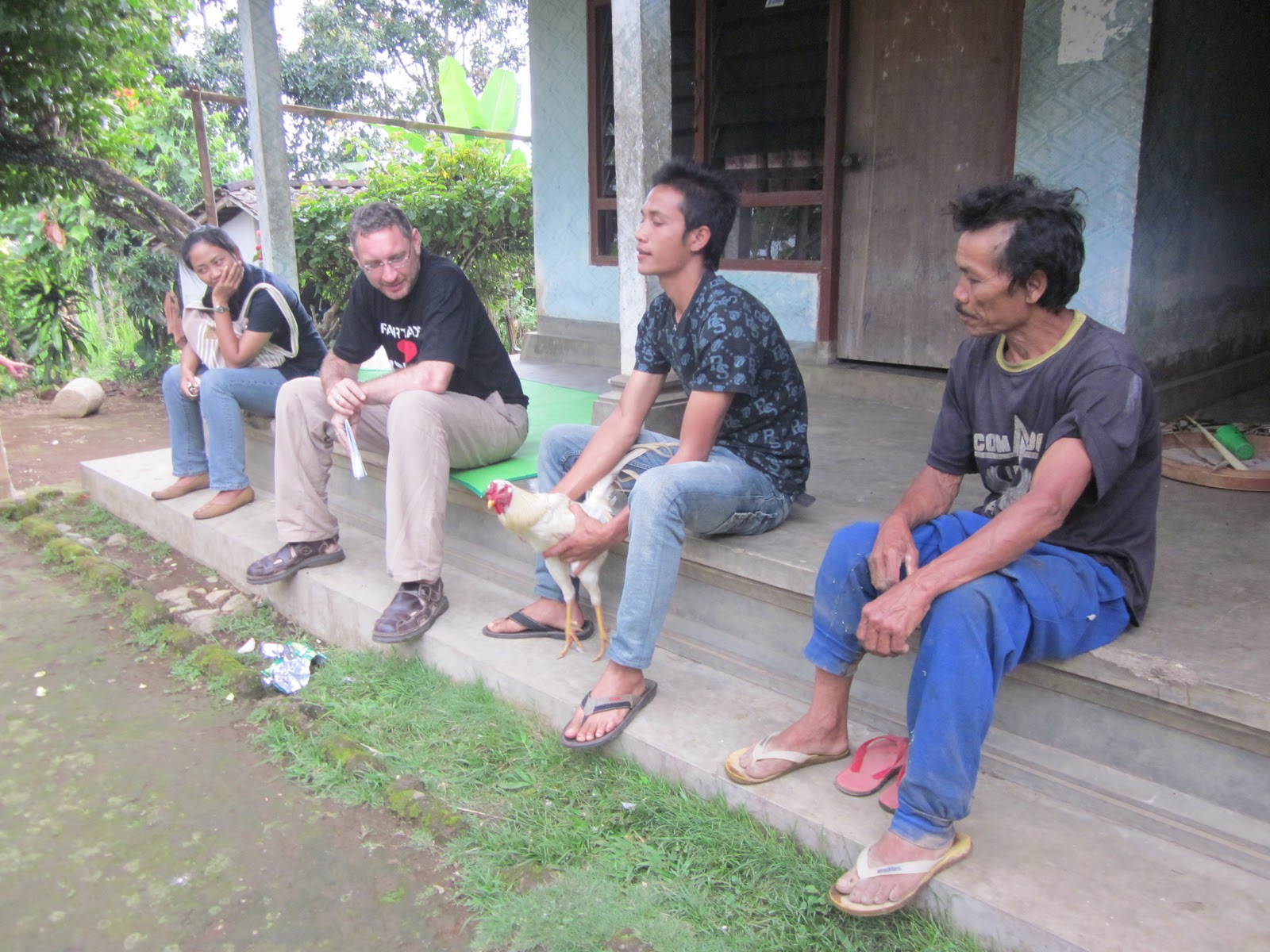
Mr. Amir Panzuri, founder and Director of Apikri agreed to hold the first meeting at their office and the others all agreed to come. Novi Kusuma Wardhani founder and Director of Java Ixora, Imam Hidayat founder and Director of Sahani Organic, members of the Ombudsman office in Yogyajakarta, a university professor in Borneo who happened to be on a study tour in Apikri to explore possibilities of introducing Fair Trade to Borneo, and Ms. Mbak Atiek of Apikri. This was the beginning of a new movement in Yogya! More importantly, this is the future of Fair Trade: Fair Trade localized in southern countries and in southern cities!

No longer can Fair Trade only mean 

           Southern Trade to the North. 

It is time for the Global Fair Trade Movement

           To enter a New Era…

Time for Fair Trade to be Expanded 

           and Localized in the South!

But how do you start a movement with founders of organizations that may have the same goals and uphold the same principles, yet work in different communities, utilize different approaches to address an array of social issues, have different trade partners, and may even have different Fair Trade certifying organizations? Well, the first step is to re-define a basic mathematical equation: 1+1 ≠ 2. 

I was looking to create synergy with these leaders, each of whom has a strong personality with extensive experience in Fair Trade; they represent the solid foundations of their respective FTOs.   

Synergy in mathematics: 1+1=11. 

Now imagine 1+1+1+1+1….

Each founding member of the new Yogya Fair Trade Movement understood Fair Trade as a business model very well, they utilized the principles in their daily work. My first task was to present the obvious, so I asked them to work together in small groups with the explicit purpose of identifying...

Fair Trade as a Business Model...


...and Fair Trade as a Movement. 


With the basics covered, I asked the members of the new Yogya Fair Trade Movement to do a self-assessment on a scale of 1-10 (10 being Yogya will be a Fair Trade Town in six months; and 1 being no activities and no movement). The average was admittedly low, but it gave us a baseline. Besides, they were not familiar with the ongoing activities of their fellow members and their respective FTOs, so here we gave time for each member to make a brief presentation. 

As a Movement, we needed to identify areas for advocacy. The groundwork of each FTO here begins with the producers, and their community, so we started from there. Secondly, the local business community is an important area for advocacy, beginning with suppliers FTOs contract with. Thirdly, they identified the local government offices and upwards to the national governmental departments and ministries with whom FTOs collaborate. Fourthly, the universities in Yogya are very influential institutions locally and within Indonesia. Fifthly, the media, whether it is print, television or online social media, these are influential forces and can have a positive impact if harnessed in an advocacy campaign. 


Additionally the local ex-patriots residing in Indonesia and the numerous tourists coming to visit Bali every year already have a high level of awareness of Fair Trade thanks to the millions of euros and dollars spent in continuous awareness campaigns of Oxfam and Maxx Havelaar in Europe, Australia, and New Zealand. Not to forget, numerous local Fair Trade shops have tremendous impacts in their communities such as the Dutch World Shops and Ten Thousand Villages in the USA and Canada.

Lastly, the local and international NGOs in Indonesia would make for terrific collaborators as they are socially aware and active in a multitude of communities throughout the nation. 
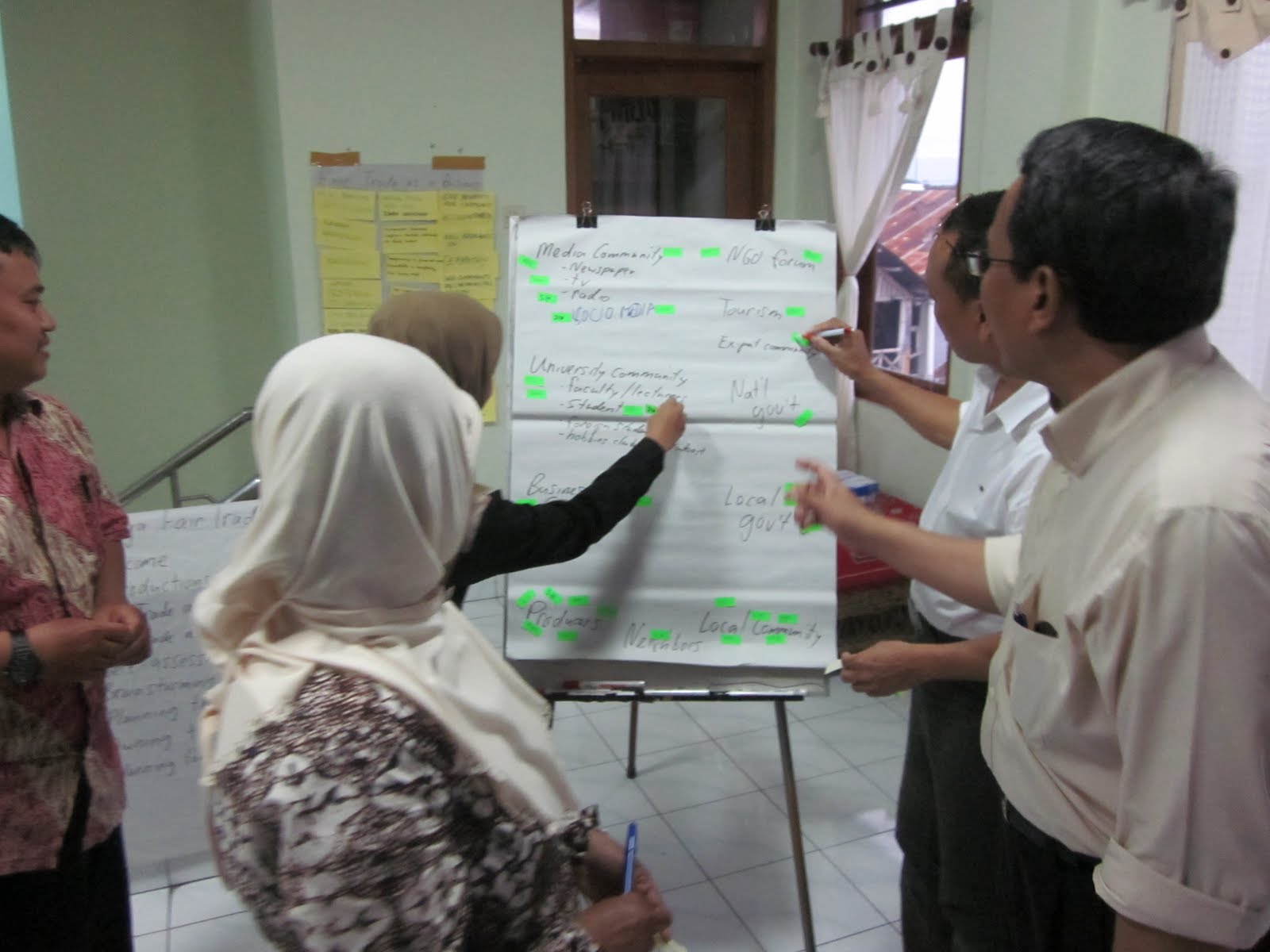

With areas of advocacy listed, next came commitment. By committing to advocacy in a particular area, there is a transfer of ownership from discussing the idea, to forming committees and groups which will lead areas of advocacy. 

In the following meeting a couple days later, members of the Yogya Fair Trade Movement listed universities that they had close connection to, whether it was a connection with faculty, students, university administration, or student organizations. Of the one hundred and twenty-two campuses, there was a direct connection with ten. This was a start! 

Create a Vision!

Next the members listed out immediate, mid-term and long-term goals. Immediate goals center on initiating ten Fair Trade Movements on the campuses they had listed. This included identifying World Fair Trade Day as inauguration day for campus movements; creating a General Secretariat Office to support campus activities and facilitate intercollegiate collaboration; and designing a logo for the new YFTM. 

The mid-term objective is to have 50+ university Fair Trade Movements within three years!!! The long-term objective is that Yogyajakarta becomes the first Fair Trade City in Indonesia! No small ambitions for this group of Fair Traders!


It is my privilege to present the founding members of 
              the Yogya Fair Trade Movement. 


Chou and I look forward to witnessing the wildfire that is about to spread through the university campuses of Indonesia ushering in a new era as Fair Trade is localized! 

Mitch Teberg, MA 


Comments received on my FaceBook page regarding this post:
Sarah Ulina Sinuraya of Mandiri Craft in Yogya wrote: "we'll join it....."
 
Darwin Smith Toapanta Saltos "Fair Trade Movement, this topics will be a model for a Fair Trade Chocolate Movement here in Ecuador. The steps are very precise and the conceptualization of idea; 1+1=11 is applicable - many thanks dear Mitch. I´m taking note - :-)"

Ten Thousand Villages Toronto "So great to see the Fair Trade movement expanding! Keep us posted, Mitch :)"

Angelo Valencia Hi, Mitch, thanks for the updates and keeping the flames afire for the benefit of those who need it the most!

Wednesday, March 23, 2011

Listening to the Voices, Indonesia


What does Fair Trade mean to the artisans,
weavers, farmers, and 
craftswomen and men of Indonesia?

When Chou and I arrived in Indonesia, we took a bit of time to reflect on where our journey was leading us and compare that to our initial intentions. After some contemplation we saw that the journey had taken its own direction in relation to what we were discovering in the Philippines. We became increasingly focused on the national networks, the national Fair Trade Movements, the Fair Trade Organizations, and the advocates who are essential to the success of Fair Trade in the South. Secondly, we were addressing some quite important issues that have all too often been glossed over in the Fair Trade Movement; issues that are quite important to Southern producers. Thirdly, we saw that the voices we went to capture, those of the producers, had once again been drowned out in our excitement over the direction the Fair Trade Movement was going in the Philippines. 

So with that observation, we started our journey in Indonesia with a renewed focus on the producers, but also recognizing the importance of a network and local FTOs. Admittedly, for the past month I have not posted any of the Indonesian findings of our journey. Many unexpected opportunities arose both in the blog and on the journey itself. Opportunities to address Fair Trade related issues on the blog; opportunities to share lessons learned in the Philippines with Fair Traders in Indonesia; and opportunities to be part of something new during our sojourn. Through it all, we kept a steady commitment to listening to the voices of Fair Trade artisans, weavers, farmers, and craftswomen and men. This first posting from our travel in Indonesia is dedicated to those women and men of Fair Trade without whom there would be no movement; the producers themselves. 

Mitra Bali is an outstanding organization founded by one truly committed man, Agung Alit, who lives and breathes Fair Trade with unflinching commitment. Through Mitra Bali, we met producers who not only benefit from Fair Trade, but also possess the same passion as the founder. 

Fair Trade Teaches Solidarity with Commitment

With all its serene beauty Bali is an ideal holiday paradise. One would imagine the resources generated from tourism would effectively raise the standard of living, but the benefit of foreign visitors to the island isn’t as far reaching as one would like to believe. 

Craftswomen and men seldom receive fair or timely payments for their work; artisans are often cheated by middlemen; and all the while multi-national conglomerates continue buying up large tracks of land to build hotel monstrosities usurping an increasing share of the tourism market to fill bottomless corporate coffers. Welcome to Bali.


Mrs. Sudi Antari has been a silversmith for Mitra Bali since 2008, having learned the trade from her husband. To be a silversmith is a common livelihood in their quiet Hindu community. When I asked her how she felt about her business dealings with a Fair Trade organization compared to mainstream buyers, she immediately stated, “I like that Mitra Bali pays 50% when ordering, it helps a lot, and for big orders it helps to buy materials. I also feel more confident when hiring my neighbors as artisans as well.” 

To this her husband added, “Payment is direct to the artisans. Normally it takes two weeks to a month before receiving payment from local shops.” He reflectively paused a moment and went on, “Before we entered into Fair Trade many artisans involved their children in production. Now no children are used. Children must focus on study.”

Interested to know more, I asked about other impacts in the community. He replied, “Through Fair Trade we can help others when we get more orders and employ them. Before business was about making a living for yourself; only about profit. Now we respect workers and share more.” Listening to him as his wife looked on, I could sense a genuine change had occurred here. Not only did they espouse Fair Trade principles, those principles were posted on the wall of their workshop in Bahasa!  

 
Diawain is a 25 year-old artisan in the serene village of Punduh Nengah nestled in the mountains of Bali. He shared his views when we visited the ongoing resource management and community development programs initiated by Mitra Bali. “The impact of Mitra Bali in my community has been in the environment. We now manage the trees and educate children about nature in schools. We also separate the biodegradable materials from our garbage. To me, Fair Trade teaches respect to the environment and wise use of wood resources. Socially, it promotes sanitation like clean toilets, provides support for our traditional ceremonies and supports the ill. It teaches solidarity with commitment.”

Youthful ambitions can also be a gauge on the impact of Fair Trade in a community. I asked him what he wanted for his future and to this he replied with a smile, “In the future I want to be myself! I want to share my knowledge with others in my community about the principles of Fair Trade. I also want to a computer so I can learn from the internet; there isn’t much interest in computers here.” 


From Bali, we went to the island of Lombok where we met the women potters of the Lombok Pottery Center. Here we happened to arrive on the day when the year’s dividends are handed out to the members. We found ourselves in a festive atmosphere with the Director, Ms. Rohmiati, as the women of each cooperative gathered together for this annual event. Normally pottery making is a home-based activity, so this is a special gathering of friends and potters on a day of recognition. For Chou and I, it was an opportunity to witness the gathering and excitement surrounding the event. Unfortunately, there was little time for interviewing members as they quickly returned home, financial rewards in hand, to prepare for Maulid, a celebration of the Prophet Mohammad’s Birthday. 

Out of curiosity, I conducted an informal survey and found that most of the dividends were spent on children’s education and on purchasing special foods for Maulid following Ramadan. 

Fair Trade Embraces Long-Term Relationships with Communities

From Lombok we went to Yogyakarta where we met with Ashoka Fellow, Amir Panzuri, founder and Director of Apikri. His passion for Fair Trade is reflected in the artisans and communities his organization works with. 


An hour’s drive from the city we met Pak Kemiran, the Bobung Village chief. The village is well known for its traditional wooden masks and crafts, and the Mask Performance. Apikri started working with his village in 1990, soon after a bridge had been built over the river connecting the it to the highway. The village chief told me that before the bridge was built, the village was very poor and had only one bicycle. “No children went to school beyond elementary school. The houses all had clay floors and bamboo walls. Now all families have a motorcycle, children all complete high school and twelve have gone on to college including my daughter.” 

After twenty years of working with villagers, the impact of Apikri can be seen and felt directly. The village chief explained, “In 1990, people needed wood for masks and crafts but there was no money to plant trees, Apikri gave us alabache tree seeds.” A decade later this effort turned into the Village Replanting Program. 


“In 2003, all the people in the village made an agreement, if we cut one tree; we had to plant ten trees. Alabache trees are fast growing and can be used in crafts after 12 years. In our village there are 250 wood producers, 11 are traders who sell to Yogyakarta, Jakarta and Bali. Before the Village Replanting Program we had to buy wood from the outside. Many thousands of trees have been planted and seedlings are grown in the households.”

Continuing his train of thought he added, “There is an increased awareness of the environment. The alabache tree is good for fertilizing the land and decreases the land erosion and landslides. Keeping the environment is a value added activity for the family. Alabache trees are also good for building. Since working with Apikri, in our village there is a change in mentality regarding the environment and children… Before, many children worked to get money for school. Now children work on crafts but it is integrated into the school curriculum as a hobby to improve their skills so they can have an income opportunity after high school. It is all part of a school program to learn handicraft production. After senior high school many continue to make crafts.”


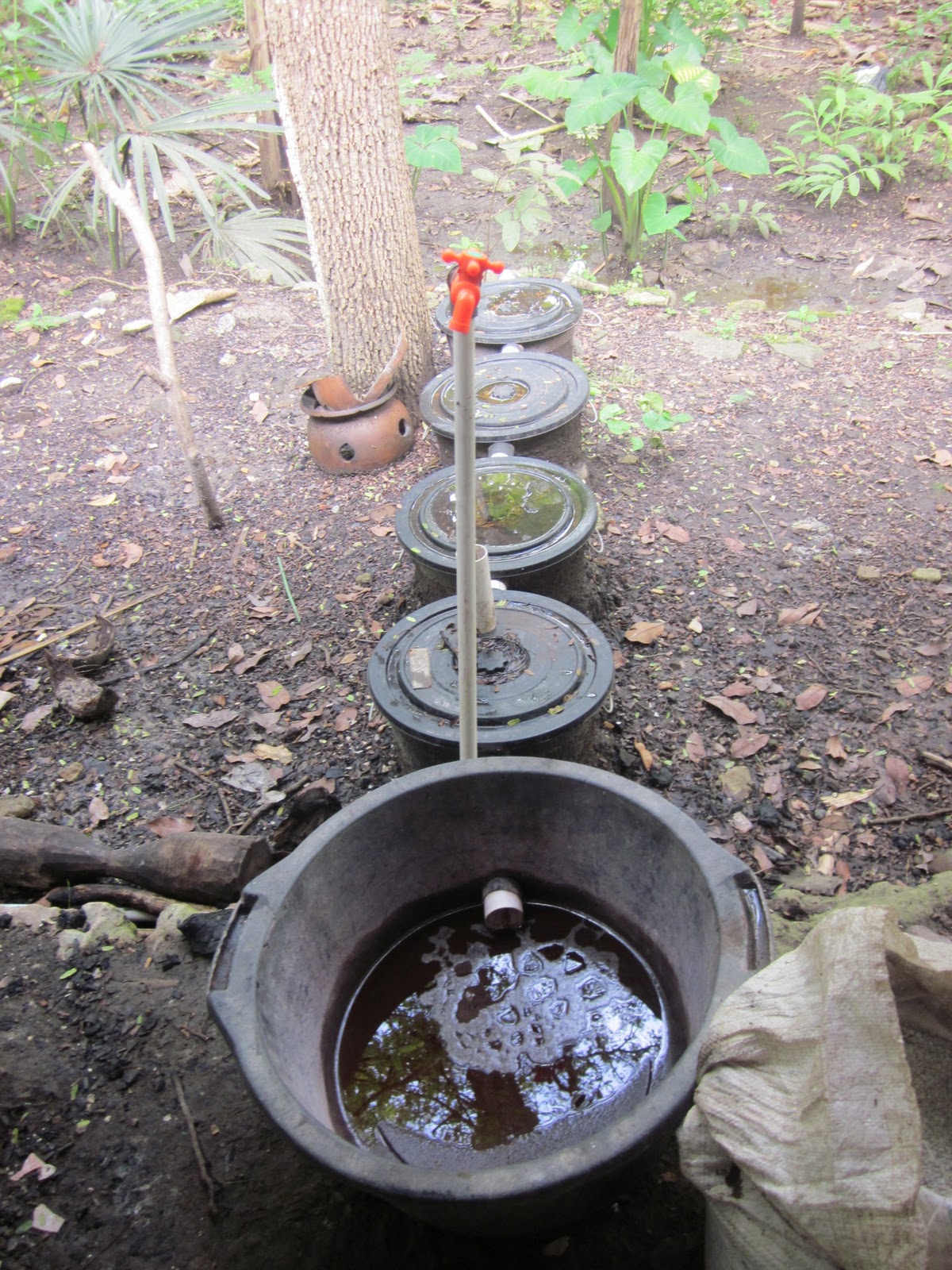
Walking up the road we came to the home and workshop of Mr. Supri a highly skilled Batik wood craftsman who has his own enterprise employing local craftswomen and men. Here we could see another impact Apikri has had on the community. A simple filter system removes pollutants and also allows him to reuse wax for batik design. “With Fair Trade I see that the focus is on the long-term relationship. I implement this principle with others I deal with because it works, and the prices are fair. I pay the artisans who work for me a fair wage, more than other companies. I don’t want to cooperate with low paying traders; by working with Apikri I have a good bargaining position. I don’t accept low offers, only fair prices. Working with Fair Trade I provide opportunity for workers who are usually farmers."

Mr. Pak Tukiran is also a wood craftsman in the village. He has received training in management and design from Apikri, and the impact it has had in his life has made him a firm believer in Fair Trade. In regards to his business dealings with Apikri, he stated, “I am included in decision making about products and prices. Prices are higher with Apikri.” He proudly added, “I have one daughter who has graduated college and is now doing her second degree in university. Our second daughter just entered the university."

During our visit we could see how the long-term relationship Apikri has fostered in Bobung Village has impacted the community, the environment and benefitted the next generation.

Fair Trade is about Personal Relationships

While in Yogyakarta, we also met with Novi Kusuma Wardhani, founder and Director of Java Ixora. Novi and her husband Dedi are energetic, creative and enthusiastic Fair Traders who are on the forward edge of the movement – watch for their involvement in the up and coming Yogya Fair Trade Movement!!  


Mr. Harsono is a reformed small business owner working with Java Ixora. He produces woven materials that are used in frames and mirrors designed by Java Ixora. By reformed, I mean that he owned a business that had collapsed, and like a phoenix rising from the ashes, Mr. Harsono has come to utilize an ethical business model after much reflection on his past practices. 

“Experience is the best teacher. Before I had a big business in crafts but it collapsed. I realized my business practices and methods were not right. I changed my approach to the workers and I changed my approach to the buyer. I realized craft production was my life and I needed to improve, to wake up. Now I use a better business approach. I focus on the personal relationships with the artisans. We provide them with a yearly bonus for the celebration following Ramadan. Also recycled materials are given to the artisans free of charge. If they get sick, we provide them financial support.

Lessons I learned from working with Java Ixora are how to do business with improvements, they motivated me to restart my business and provided personal support. They also taught me better ways to manage workers. My business relationship with Java Ixora is like family or a close friendship. There is a trust. Our relationship is more than just crafts; I have a personal connection that is more important than profit.

My wife also makes and sells food locally, baked goods.”

To this Novi added, “We also teach other income opportunities from different activities for when craft production is down.”

The focus on personal relationships could be seen in their friendly interactions with the men and women at the workshop. They also provide their workers with a lunch, which would normally cost about 25% of their daily wage. This added-measure benefits both him and his employees and sets him apart from other local employees who pay 25% less than his entry pay level. 


In an interview with Ms. Menik, a weaver for Gapuro Weavers, which also works with Java Ixora, we saw how the attention to personal relationships could be applied in a different profession in another community. Menik compared her experience with Gapuro Weavers in contrast to another textile company. “In the other workshop there was no continuous work to due to material availability. Now I am continuously working which greatly helps my income. I am happier here, the relationship with the owner is better, like family. I feel very close to them.” 

I asked her if she received a fair wage and she said, “I also receive a higher wage here and I get a bonus for textiles I produce when the owner makes a sale. If I need to take time off work due to illness, I get support to buy medicines.” To this she smiled and added, “Every year I also receive a bonus after Ramadan.” 

Her husband also works for a textile company, but it is not affiliated with Fair Trade. “Compared with my husband’s workplace, the management is much better here. There they have poor management because they have poor job descriptions. Each process requires specific skills, and here the job description matches the skills needed in the process; very precise.”

Maintaining social commitments; establishing long-term relationships to improve community well-being while taking measures to protect the surrounding environment; and the development of personal relationships with the producers are the hallmarks of Fair Trade in Indonesia.  

Thank you for joining us in this journey. It is my hope that this post will provide some insight on the application of Fair Trade and what it means to the producers of Indonesia. 
Feel free to post your comments, ideas or suggestions below. 

Sincerely, 

Mitch Teberg, MA