Showing posts with label Women's Rights. Show all posts

Thursday, March 8, 2012

International Women's Day: Gender Equity and Non-Discrimination

The Global Fair Trade Movement is founded on principles which can be viewed as a living document; a "life-form" that evolves and progresses with time. As members we are enabled to keep our movement relevant by periodically reflecting upon and revisiting these principles. In June of 2011, recognizing the importance of cultural influences, the WFTO improved Principle 3 on Fair Trading Practices:

Fair Trade recognizes, promotes and protects the cultural identity and traditional skills of small producers as reflected in their craft designs, food products and other related services.

On this International Women's Day, I propose two essential changes to Principle Six: Commitment to Non Discrimination, Gender Equity and Freedom of Association. 

Firstly, we have identified Non-Discrimination as a principle we abide by, however there has been an oversight in defining the term itself. As it stands, Principle 6 simply states, "The organization does not discriminate in hiring, remuneration, access to training, promotion, termination or retirement based on race, caste, national origin, religion, disability, gender, sexual orientation, union membership, political affiliation, HIV/Aids status or age." However, can we improve upon this single sentence; can we provide more clarity to answer the basic question: What is Discrimination?  

When an organization utilizes a Rights-Based Approach they recognize poverty as injustice and includes marginalization, discrimination, and exploitation as central causes of poverty. To integrate a Rights-Based Approach is to strengthen our trade partners not only in trade relations, but in their quality of life; to enjoy the freedoms internationally recognized as inherent to all human beings. Isn't this what we want for our producers?

Admittedly many corporations around the world have incorporated policies to clearly define this issue and it is time the Fair Trade Movement does the same. However, we can do much better than a providing a corporate framework or dictionary definition of discrimination. If we integrate a Rights-Based Approach to Fair Trade, we don't need to look far in order to find a fitting definition which can be readily applied. 

 
The United Nations Convention on the Elimination of All Forms of Discrimination Against Women (CEDAW) is the convention with the most signatory nations of all the human rights treaties. Article 1 of this groundbreaking treaty presents a clear definition of discrimination which can easily be incorporated into our existing principles.
 
"‘Discrimination against women’ shall mean any distinction, exclusion or restriction made on the basis of sex which has the effect or purpose of impairing or nullifying the recognition, enjoyment or exercise by women, irrespective of their marital status, on a basis of equality of men and women, of human rights and fundamental freedoms in the political, economic, social, cultural, civil or any other field.” 
 – United Nations Convention on the Elimination of All Forms of Discrimination Against Women,
Article 1

 
Let's break this down more carefully to clarify what this Article is stating; to examine to actions, conditions and impacts that define discrimination:
  • The term “discrimination against women” shall mean
  • any distinction, exclusion or restriction made on the basis of sex which has the
  • effect or purpose of
  • impairing or nullifying the recognition, enjoyment or exercise by women,
  • irrespective of their marital status on a basis of equality of men and women,
  • of human rights and fundamental freedoms in the political, economic, social, cultural, civil or any other field. 
 
We can clearly see that this definition looks at impacts far beyond hiring, remuneration, access to training, promotion, termination or retirement. In fact, it looks at the restriction of women's human rights as a means to determine if an action is discriminatory.

Discrimination defined in CEDAW is clear, and easy to understand. Unfortunately the wording of Fair Trade Principle 6 fails to recognize the many forms of discrimination:
  • Direct or Indirect (Intended or Unintended) – Indirect includes a neutral law which has the effect of discriminating
  • In law (de jure) or in practice (de facto)
  • Present or Past/Structural, which is to say "historical discrimination"
  • In all fields (civil, politcal, social, cultural, economic)
  • Inter-sectional / Multiple Discrimination
 
By clarifying inter-sectional, CEDAW recognizes that groups of women suffer multiple discrimination based on additional grounds such as:
  • Race or Ethnicity
  • Religion
  • Disability
  • Age
  • Class
  • Sexuality
Why is incorporating this definition important?
Considering a majority of the global inhabitants (51%), and a majority of Fair Trade Producers are women who experience various forms of discrimination on a daily basis, the Fair Trade Movement must take a more active role in eliminating discrimination against women. We can also broaden this definition to include discrimination based on race, caste, national origin, religion, disability, sexual orientation, union membership, political affiliation, HIV/Aids status or age.

For the sake of clarity, I propose rewording of the Principle of Non-Discrimination in such a way as to integrate a Rights-Based Approach to our work: 

The organization does not discriminate in hiring, remuneration, access to training, promotion, termination or retirement. The term “discrimination” shall mean any distinction, exclusion or restriction made on the basis of sex, race, caste, national origin, religion, disability, gender, sexual orientation, union membership, political affiliation, HIV/Aids status or age which has the effect or purpose of impairing or nullifying the recognition, enjoyment or exercise by anyone, irrespective of their marital status on a basis of equality of men and women, of human rights and fundamental freedoms in the political, economic, social, cultural, civil or any other field.


The second proposed change to our principle of Gender Equity is recognizing women's right to a Paid Maternity Leave


As it stands, our Fair Trade principle on Gender Equity does not recognize this right. As a matter of fact, it only recognizes pregnant women in one sentence, "The organization takes into account the special health and safety needs of pregnant women and breast-feeding mothers." Initially this point may seem unnecessary, or a Western luxury, but when we view this from a Rights-Based perspective, women are already entitled to a paid maternity leave and it is our collective duty to uphold this right. If we, as a global movement believe that we stand for the rights of women, we must insist all Fair Trade producers, buyers, exporters, importers, wholesalers  and retailers recognize women's right to a paid maternity leave.

United Nations Convention on the Elimination of All Forms of Discrimination Against Women

Article 11
2. In order to prevent discrimination against women on the grounds of marriage or maternity and to ensure their effective right to work, States Parties shall take appropriate measures

(a) To prohibit, subject to the imposition of sanctions, dismissal on the grounds of pregnancy or of maternity leave and discrimination in dismissals on the basis of marital status;
 
(b) To introduce maternity leave with pay or with comparable social benefits without loss of former employment, seniority or social allowances;
 
(c) To encourage the provision of the necessary supporting social services to enable parents to combine family obligations with work responsibilities and participation in public life, in particular through promoting the establishment and development of a network of child-care facilities; 
 
(d) To provide special protection to women during pregnancy in types of work proved to be harmful to them.
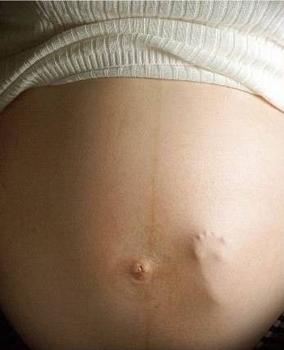

By incorporating a Paid Maternity Leave into our Principles we are not introducing a foreign concept, but integrating internationally recognized rights entitled to all women regardless of where they reside. 

Integrating Paid Maternity Leave with Fair Trade Producers

In 2011, while working with Helvetas Intercooperation, a Swiss NGO, in Vietnam we encountered a common practice amongst Small and Medium-sized Enterprises (SMEs). According to Vietnamese law, SMEs are required by law to financially support the women on maternity leave. This is done through purchasing a Social Insurance where the workers pay 8.5% of their salary and SMEs pay 20% of their pay for the triple insurance coverage plan. However, most SMEs do not purchase this insurance for their workers thereby cutting costs. The consensus amongst SMEs in Vietnam regarding maternity leave seems to be that women are entitled to an unpaid leave and many return to work afterwards. According to the law, those who don’t provide them with insurance must pay out of pocket the same amount for maternity leave. When women assert their rights to a paid leave, more frequently than not, they are fired without separation pay and not welcome to return to the position they once held. 

Helvetas wanted to integrate a paid maternity leave into the contract with producers, however, we quickly discovered a difference between the Helvetas standard of 6 weeks maternity leave and Vietnamese law. Maternity leave in Vietnam as per the Labour Law is:
  • Normal working condition: 4 months paid maternity leave
  • Hardship (rural / military / dangerous environment): 5 months paid maternity leave
  • Disabled women: 6 months paid maternity leave
 
Our predicament was to write a policy in the contract which can be implemented globally. Through dialogue and discussion with producers in Vietnam, we came to set a policy that is acceptable to both Helvetas and Vietnamese producers: 

Producer offers whichever is greater: a minimum paid Maternity Leave of not less than 6 weeks or what is established in the national labour laws, regardless of contracting status or time in employment; plus additional leave on an as-needed basis with a guarantee of resuming employment upon return.

So, in short, incorporating a Paid Maternity Leave is not only possible, it is essential. Without integrating this right, we neglect to uphold our responsibility to women worldwide.


Today I submit to you that Fair Trade, as a Global Movement, must integrate a Rights-Based Approach to strengthen our trade partners not only in trade relations, but in their quality of life. We can start through a comprehensive integration of women's rights into our principles of Gender Equity and Non-Discrimination. 


Sincerely,

Mitch Teberg, MA 
International Consultant
Sustainable Development / Fair Trade/ Women's Rights and Gender
Researcher / Trainer / Consultant   

Feel free to add your comments, thoughts or ideas below or catch me on facebook. For those who prefer reading black on white, here is the downloadable version of this post on pdf:

Monday, November 7, 2011

Women's Empowerment and Fair Trade


According to Principle 6 of Fair Trade, We the producers, artisans, weavers, farmers, and craftswomen and men; We the Fair Trade Organizations, NGOs, and Community-Based Organizations; We the local, national and regional Fair Trade networks; We the advocates, activists and supporters; We the conscientious buyers, importers, retailers, and consumers; and We the global movement all embrace Gender Equality. However, we need to ask exactly what does this mean and how is it attained?

Obviously to begin we need to define Gender. Firstly, gender is not sex; it is not a biological difference.  In March, 2011 I examined how gender originates: International Women's Day: What is Gender?  To be succinct, Gender is a social construct; it is how society views and judges men and women differently based on five reproductive organs, our only physical differences. To understand that gender is a social construct is to examine the effects of this construct in our own lives. Ask yourself, what roles women have in the household, in the family, in the community, in society and within culture. How do those roles differ from the roles of men? What are the expectations a given society places on women and men based on those roles. 

When we separate sex from gender, we begin to see the differences between men and women are nothing more than socially constructed differences. It isn’t that men are better decision-makers just because they have a penis; or that women are better caretakers of children just because they can give birth. These are all assumptions; social constructs surrounding reproductive functions, not based on fact.  Now let's go on...

What is Gender Equality? 

Gender Equality is commonly defined as a social order in which women and men share the same opportunities and enjoy full participation in the social, cultural, political, legal, and economic arenas, to include both the public and domestic realms. In other words, there are no "glass ceilings" limiting levels of participation, no constraints placed on either men or women due to socio-cultural constructs or expectations, and no consequences for pursuing goals and ambitions in any of these areas. 


What is Gender Equity?

Gender Equity entails the steps, set of actions, attitudes, and assumptions that provide equal opportunities in the progress towards gender equality.

One action a state takes towards gender equity is to sign and ratify the United Nations Convention on the Elimination of All Forms of Discrimination Against Women (CEDAW). To understand the principles of this convention, read A Rights-Based Approach to Fair Trade: Understanding CEDAW. Once this treaty is ratified by the state, the onus of responsibility for ensuring equality between men and women belongs to the state. The state in turn enacts laws and policies to be implemented in the legal systems. Ultimately the implementation of gender equality laws influence the socio-cultural norms of society.  
 
Why is it important for the Global Fair Trade Movement to understand this?  To begin, there is a direct linkage between globalization, exploitation and poverty, which Fair Trade aims to address. Gita Sen, a well known Indian intellectual and author of Development, Crises, and Alternative Visions: Third World Women’s Perspectives, has greatly helped to transform popular thinking on Gender and Development. In her speech, Challenges to Gender Justice in a Neo-Conservative Era, she noted: 


"As kept being recorded in one human development report after another, was soaring global inequality, between countries and within countries, soaring inequalities between different classes, between different sections and segments of people and particularly the feminization of poverty on a dramatic scale.

Now this is interesting because globalization is often held up as being the era of the feminization of the labour force.  Women in fact have come into the labour force in large numbers. What is ironic therefore is that you have a feminization of the labour force and a feminization of poverty taking place simultaneously. And I think this reflects the paradoxes and the ironies of the current stage of global capitalist order.  Because it means that getting a job is no guarantee that you will be out of poverty.  The number of working poor, the insecurity for those who work and who struggle to survive increased.” 

                                                                                    - Gita Sen


Considering the ‘feminization of poverty’ Sen illuminates in her speech, the impact of the free market ideology on poor women in developing nations is particularly harmful. When we utilize a Rights-Based Approach we recognize poverty as injustice and includes marginalization, discrimination, and exploitation as central causes of poverty.   

For a Rights-Based Approach to be successful, it helps to have a comprehensive framework on which to build a movement. Winner of the 2003 Africa Laureate, Sarah Longwe, designed a theoretical model based on a five-step approach to Gender Equity, a model I utilized for my Master’s Degree thesis on the Obstacles and Approaches to Gender Equality in Sri Lanka, © 2008 (see below).


Longwe's Women's Empowerment Framework

The purpose of Longwe's Women's Empowerment Framework is to move upwards from gender equity to gender equality. Firstly, through the provision of the needs of women; then onto raising awareness of women’s rights. The third through fifth steps are to facilitate access to, participation in, and ultimately share control of three frameworks: Social-Cultural, Legal and Political. In short, Sarah Longwe’s Framework presents a Road Map to rise from gender equity to substantive gender equality (read: A Rights-Based Approach to Fair Trade: Understanding CEDAW) as emphasized in the UN convention on Women's Rights and embraced by UNIFEM. Below is Longwe's Empowerment Framework, to see the progressive steps read it from bottom up; from Welfare to Control:


Longwe’s Women’s Empowerment Framework
Control
Empowerment seeks a balance of power between women and men, so that neither is in a position of dominance. It means that women have power alongside men to influence their destiny and that of their society. In Longwe’s view, empowerment is an inter-connected cycle of countering discrimination and oppression. Addressing the roots of inequality at one level leads to a discussion about all of the other levels. Empowerment takes place as individual women and groups of women move between levels, gaining strength along the way.
Empowerment occurs in the Process of Social Change
Participation / Mobilization
The individual woman in the home is not likely to make much progress in challenging traditional norms – Power expands in numbers and connection. Mobilization is therefore the fourth and crucial stage of empowerment, which enables the collective analysis of gender issues, and the collective commitment to action. Mobilization is largely concerned with redefining participation in decision making, as participation of a mobilized group will spark the search for empowerment at yet another level. In development projects, it includes involvement in needs assessment, project design, implementation and evaluation.
Social Change occurs with mobilization!!!
Conscientisation
Here an understanding of the difference between sex roles and gender roles comes into force with the belief that gender relations and the gender division of labour should be fair and agreeable to both sides, and not based on the domination of one over the other. Access now pertains to women’s access to factors of production, land, labour, credit, training, marketing facilities, and all publicly available services and benefits - on an equal basis with men. Equality of access is obtained by securing equality of opportunity through legal reform to remove discriminatory provisions.
Social Change is on the agenda!
Access
The gender gap at the welfare level results from inequality of access to opportunity, information, and other resources. Empowerment means that women are 1) made aware of the gap and 2) animated to take actions for gaining access to their fair and equal share of the various resources available within the household, and within the wider system of state provision. Action here takes women automatically to the next level.
Welfare


---------
At this base level work views women as passive recipients and welfare pertains to the level of material welfare of women, relative to men, with respect to food supply, income and medical care, without reference to whether women are themselves the active creators and producers of their material needs. This level is not sustainable nor does it empower women.


What I appreciate about Longwe's model is that Empowerment is not a given, and the end result is not equated to material gains. Empowerment takes place as individual women and groups of women move between levels, gaining strength along the way; Empowerment occurs in the Process of Social Change. However, one thing remains - How does this empowerment framework relate to Fair Trade? 
 
This may seem a bit academic, but to test where Fair Trade stands in relation to empowering women on this framework, I have placed relevant principles of Fair Trade in line with the level of actions taken towards gender equality.

Longwe’s Women’s Empowerment Framework

Fair Trade Principle
Empowerment seeks a balance of power between women and men, so that neither is in a position of dominance. It means that women have power alongside men to influence their destiny and that of their society.
Control
Principle 6: The organization actively promotes applications from women for job vacancies and for leadership positions

Women’s collective analysis of gender issues, and the collective commitment to action. Redefining participation in decision making, as participation of a mobilized group will spark the search for empowerment at yet another level
Participation
Principle 6: Women fully participate in decisions concerning the use of benefits accruing from the production process; The organization respects the right of all employees to form and join trade unions of their choice and to bargain collectively.
Principle 2: The organization finds appropriate, participatory ways to involve employees, members and producers in its decision-making processes.
Principle 4: A fair price is one that has been mutually agreed by all through dialogue and participation; equal pay for equal work by women and men.
Understanding of the difference between sex roles and gender roles; division of labour should be fair and agreeable to both sides, and not based on the domination of one over the other. Access now pertains to women’s access to factors of production, land, labour, credit, training, marketing facilities, and all publicly available services and benefits - on an equal basis with men.
Conscientisation
Principle 6: The organization provides opportunities for women and men to develop their skills; in production situations where women's work is valued less highly than men's work, women's work is re-valued to equalize pay rates and women are allowed to undertake work according to their capacities.
Principle 8: The organization develops the skills and capabilities of its own employees or members; Organizations working directly with small producers develop specific activities to help these producers improve their management skills, production capabilities and access to markets
Principle 3: (When a pre-payment is received) from buyers, (the organization) ensure that this payment is passed on to the producers or farmers who make or grow their Fair Trade products. 
Empowerment means that women are 1) made aware of the gap and 2) animated to take actions for gaining access to their fair and equal share
Access
Principle 6: The organization does not discriminate (regardless of) gender or sexual orientation; The organization takes into account the special health and safety needs of pregnant women and breast-feeding mothers.
The gender gap at the welfare level results from inequality of access to opportunity, information, and other resources
Welfare
Principle 1: The organization supports marginalized small producers… it seeks to enable them to move from income insecurity and poverty to economic self-sufficiency and ownership.
Principle 6: Organizations working directly with producers ensure that women are always paid for their contribution to the production process, and when women do the same work as men they are paid at the same rates as men.
  
From this matrix we can clearly see that Fair Trade is not solely about earning a living wage, but is genuinely a movement which embraces gender equality. To make Longwe's framework easily accessible and functional for the women and men of Fair Trade I have published it here on a downloadable pdf format:
Longwe's Women's Empowerment Framework

However, before we celebrate the proactive steps Fair Trade takes towards women's empowerment, I invite you to read a blog post which is reflective of the realities on the ground for some Fair Trade producers. While on the Journey for Fair Trade in Ache, Indonesia, I discovered that despite FLO certification, none of the twelve cooperatives had followed through on their obligations towards empowering women. 

Their failure to follow our shared principles was reflected in the fact that most of these coffee producers had NO WOMEN REPRESENTATIVES out of the 50+ elected representatives in their decision-making bodies. Granted, a couple cooperatives I had been exposed to in the region had elected one or two women to decision-making boards, but this was hardly representative of the women's membership. I encourage you to read the post: Coffee Part III - Empowering Communities through Action in which I discuss what actions I took to break the ice to address this seemingly culturally sensitive issue. Not that change imminently followed my actions, but a seed was dropped, and social norms questioned for the first time.


With that said, Johannes Egger the FLO-Cert Auditor for Indonesia has presented me with another experience he has with two cooperatives, "There are also some success stories in Aceh!!!! There is one with a complete board of a cooperative of women. Another successful cooperative is managed by a woman (one of the best managements I have seen the last three years)."  I find this to be an inspiration, that change can happen through Fair Trade!

My point here is that 
Fair Trade is as much about Social Change,
    as it is about Empowering Producers.
 

When I call for integration of a Rights-Based Approach to Fair Trade, I am calling for the enactment of what has already been set in motion through our shared principles: Women's Empowerment through Social Change. 


Join Chou and I in integrating a Rights-Based Approach to Fair Trade.

Mitch Teberg, MA 
International Consultant
Sustainable Development / Fair Trade/ Women's Rights and Gender
Researcher / Trainer / Consultant   

Feel free to add your comments, thoughts or ideas below or catch me on facebook.


To see how Longwe's framework was utilized to analyze the national women's movement of Sri Lanka, I have published it here in a downloadable pdf format: 

Obstacles and Approaches to Gender Equality in Sri Lanka, Mitch Teberg, 2008


Saturday, October 29, 2011

A Rights-Based Approach to Fair Trade: Understanding CEDAW

All Fair Trade Organizations, supporters, consumers, advocates and activists support the Principle of Gender Equality. Unfortunately, I must admit that most of them are not familiar with the United Nations Convention on the Elimination of All Forms of Discrimination Against Women (CEDAW). To advocate for a Rights-Based Approach to Fair Trade it is vitally important that Fair Traders know what this convention is and how it works, particularly when it impacts 51% of the global population, yet women are often considered to be in the minority. For this reason, I am committing this post to understanding CEDAW.

Origins
Why was it necessary to adopt a UN Declaration on women's rights when the Universal Declaration of Human Rights (1948), and two additional conventions securing the rights the civil, political, economics, social and cultural rights already existed since 1966?

The reasons are clear once you take a look at what is missing. Firstly, there was an inability to address abuses against women, particularly when women are deprived of their rights. Not only that, there was a glaring failure to understand the difference between sex and sex-based differences contributing to inequality. Additionally, there was a distinct absence of reproductive rights and freedom for women in the conventions, thereby necessitating a separate convention to address these rights. Equally important was the need to make states accountable for positive action ensuring women's rights. Lastly, there was a need to recognize that individuals and not just state parties contribute to the gender disparities:
  • Non-recognition of women’s human rights by men and women alike
  • Non-recognition of abuses against women
  • Non-recognition of sex, sex-based differences and gender as constituting risk and basis for vulnerability to violation 


Much to my chagrin, the United States stands united with Iran as the only two nations not to ratify CEDAW. It would be great if the US were to join the rest of the civilized world in recognizing this convention.

A Look Inside CEDAW

The Guiding Principles of CEDAW are:
  • Substantive Equality
  • Non-Discrimination
  • State Obligations 
Non-Discrimination
Let's begin with the principle of Non-Discrimination. CEDAW is the only UN convention to clearly define discrimination against women in the first Article, so let's break it down for simplicity:
The term “discrimination against women” shall mean
  • any distinction, exclusion or restriction made on the basis of sex which has the
  • effect or purpose of
  • impairing or nullifying the recognition, enjoyment or exercise by women,
  • irrespective of their marital status on a basis of equality of men and women,
  • of human rights and fundamental freedoms in the political, economic, social, cultural, civil or any other field.
Discrimination defined in CEDAW is clear, and easy to understand. Furthermore, the convention recognizes Discrimination as:

  • Direct or Indirect (Intended or Unintended) – Indirect includes a neutral law which has the effect of discriminating 
  • In law (de jure) or in practice (de facto) 
  • Present or Past/Structural, which is to say "historical discrimination" 
  • In all fields (civil, politcal, social, cultural, economic)
  • Inter-sectional / Multiple Discrimination
By clarifying inter-sectional, CEDAW recognizes that groups of women suffer multiple discrimination based on additional grounds such as:

  • Race or Ethnicity 
  • Religion 
  • Disability 
  • Age 
  • Class 
  • Sexuality

Approaches to Equality
The first principle is a progressive approach to Equality. However, to get a clear understanding of what the term Substantive Equality encompasses, it will be helpful to review traditional approaches to women's equality. Two commonly found approaches are the Formal or Sameness Approach and the Protectionist Approach.


A Formal Approach to Equality 
This approach regards women and men as the same, and as such it treats them as the same. On the surface this may seem fair, but the effect can be detrimental. Firstly, it does not take into account the difference between biological and socially constructed differences. To understand how gender is a social construct, read the March, 2011 post on International Women's Day: What is Gender

Secondly, the Formal Approach uses a male standard while disregarding the special needs of women. Choosing this gender-blind approach we are ignoring biological and socio-cultural differences that need to be addressed.

Thirdly, it assumes that women will have access equal to opportunities, but according to the same rules as men. This does not take into account historical inequality or socio-cultural practices. For example, if women have been inhibited from attending schools, participating in social events, utilizing the court systems, or participating in local or national politics for the past several decades, to suddenly say women have equal access to all these functions without providing a framework to raise awareness, educate, provide access, and facilitate the use of these systems will lead to a continued absence of women in these spheres.

Lastly, this approach puts a burden on women to achieve male standards. When these standards cannot be reached, the blame is inevitably placed on women and is used as justification for continued inequality. 


The Protectionist Approach to Equality
A Protectionist Approach, rooted in patriarchy, recognizes the difference between men and women, but is framed in such a way that it considers "women's weakness" as a rational for different treatment. Firstly, women lose out on opportunities afforded to men due to exclusion. Secondly, it curtails women's rights and precludes their freedom of choice instead of empowering women. Lastly, it reinforces existing male and female stereotypes, and fails to lead to social change. The effect is a failure to promote the equality of women, and instead forces women into second-class citizenship. 
 
 
Substantive Equality
Substantive Equality, often referred to as the Corrective Approach, recognizes differences while affirming equality between men and women. To begin it encompasses both de jure (by law) and de facto (by practice) equality. Under this convention, the state has an obligation to correct the environment that disadvantages women. This is done by requiring all state initiatives to lead to:
  • Equality of opportunities
  • Equality of access
  • Equality of results or benefits

Now armed with a basic knowledge of the common approaches to equality, let's try examining a case study. In 2009, after completing a Master's Degree in Sustainable Development I had done an internship with the International Women's Rights Action Watch - Asia Pacific (IWRAW-AP) in Kuala Lumpur, Malaysia (http://www.iwraw-ap.org/). As an intern I was involved in CEDAW training workshops. The case study below is from IWRAW-AP, and will test your new knowledge! Remember, states have obligations under CEDAW to correct an environment, and in the court of law a court can hold a state accountable to the international treaties it signs...

  
As an exercise intended to provide an opportunity to utilize lessons learned, it is interesting to note how often people revert to their old perceptions. 

Before going into the answers ask yourself a few questions:
  • What approach did the prison authorities take? (Formal, Protectionist or Corrective)
  • In the environment as it exists, whose safety is at risk? 
    • Only women wardens? 
    • Both women and men wardens? 
    • All prison wardens and all prisoners?  
  • In supporting the existing policy, did the judge change the environment? 
  • What changes could the court rule to make it a safe environment for all?

Substantive Equality places the onus of responsibility on the state to change an environment, regardless of whether it is a work environment or in the public streets, the state must facilitate the changes needed to ensure equality between men and women. 
 

State Obligations
These are legally binding obligations and an existing internal law is not an excuse for non-compliance. Nor are internal divisions of power a viable defense for not drafting and implementing laws which promote gender equality. Succinctly stated, once the treaty is ratified, a State is offering itself to scrutiny on the basis of standards set forth in the Convention. 


Policy of Eliminating Discrimination
Arguably, the state can set a social environment which promotes gender equality, or through inaction create an atmosphere of disregard for women's rights  Above we covered Article 1 of the convention in defining discrimination. Article 2 details the obligation of the state in setting an atmosphere conducive to social change:

Article 2: Pursue by all appropriate means and without delay a policy of elimination discrimination against women and to this end undertake to:

  • Embody the principle of equality in constitution and laws 
  • Ensure practical realization of the principle of equality 
  • Prohibit discrimination against women 
  • Legal protection of rights of women/against discrimination 
  • Refrain from discrimination (public actors) 
  • Eliminate discrimination by any person, organization or enterprise 
  • Modify or abolish laws, regulations, customs and practices that constitute discrimination and to modify social and cultural patterns of conduct (2f and 5a) 
  • Repeal discriminatory penal provisions

CEDAW holds private actors accountable through the State. As a result, the State must:
  1. Prevent and deter private acts of discrimination;
  2. investigate and negate their consequences;
  3. provide for remedies, redress, compensation or sanctions for the performance of such acts.
This includes violations by private actors of a pervasive or persistent character. 


CEDAW Overview
Articles 1 - 5 create the general SUBSTANTIVE framework of the constitution
  • Art. 1: Definition of Discrimination 
  • Art. 2: Measures to be Taken to Eliminate Discrimination 
  • Art. 3: Guarantees full development and advancement of women 
  • Art. 4: Special Measures 
  • Art. 5: Modifying Social and Cultural Patterns of Conduct

Articles 6 - 16 are specific substantive areas
PART I

  • Art. 6: Trafficking and Prostitution

PART II

  • Art 7: Political and Public Life 
  • Art. 8: Participation and the International Level 
  • Art. 9: Nationality

PART III

  • Art. 10: Education 
  • Art. 11: Employment 
  • Art. 12: Healthcare 
  • Art. 13: Economic and Social Benefits 
  • Art. 14: Rural Women

Part IV

  • Art 15: Equality Before the Law 
  • Art.16: Marriage and Family Life
Part V
  • Articles 17 - 23 Establishment and Functioning of the CEDAW Committee

Part VI
  • Articles 23 - 30 Other details relating to the administration, interpretation and implementation of the Convention


To read CEDAW in English, click here
To read CEDAW in Spanish, click here
To read CEDAW in French, click here
To read CEDAW in Arabic, click here
To read CEDAW in Chinese, click here
To read CEDAW in Russian, click here

Working in an array of South and SE Asian nations, I have always been able to request translations in printed form from the national UNIFEM offices - they have a budget for printed materials, so don't hesitate to make a request! For those who have trade partners in developing nations, I encourage you to do some online research of Women's Rights Organizations,  to include Rights-Based Non-Government Organizations (NGOs) and Community-Based Organizations (CBOs) in their country and put them in touch with your trade partner. It is important that as Fair Traders we unite with the Rights-Based Organizations in their efforts to make change happen and put an end to gender inequality and social injustice. 

I encourage you to contract with these organizations to provide training in Women's Rights and related issues to your producers, after all it is the responsibility of Fair Trade importers, wholesalers, buyers, and retailers to provide for the development of producer groups in order that they are empowered, self-sufficient trade partners capable of conducting international trade in ways which are beneficial to them and their community, respectful of their rights and free from any form of exploitation. Integrating a Rights-Based Approach is essential for the sustainability of Fair Trade and I know from experience that it is possible, because I have designed and conducted training programs that do exactly this! 

Join Chou and I in integrating a Rights-Based Approach to Fair Trade!


Mitch Teberg, MA 
International Consultant
Sustainable Development / Fair Trade/ Women's Rights and Gender
Researcher / Trainer / Consultant   

Feel free to add your comments, thoughts or ideas below or catch me on facebook. For those who prefer reading black on white, here is the downloadable version of this post on pdf:

A Rights-Based Approach to Fair Trade - Understanding CEDAW