Showing posts with label Producers view of Fair Trade. Show all posts

Wednesday, March 23, 2011

Listening to the Voices, Indonesia


What does Fair Trade mean to the artisans,
weavers, farmers, and 
craftswomen and men of Indonesia?

When Chou and I arrived in Indonesia, we took a bit of time to reflect on where our journey was leading us and compare that to our initial intentions. After some contemplation we saw that the journey had taken its own direction in relation to what we were discovering in the Philippines. We became increasingly focused on the national networks, the national Fair Trade Movements, the Fair Trade Organizations, and the advocates who are essential to the success of Fair Trade in the South. Secondly, we were addressing some quite important issues that have all too often been glossed over in the Fair Trade Movement; issues that are quite important to Southern producers. Thirdly, we saw that the voices we went to capture, those of the producers, had once again been drowned out in our excitement over the direction the Fair Trade Movement was going in the Philippines. 

So with that observation, we started our journey in Indonesia with a renewed focus on the producers, but also recognizing the importance of a network and local FTOs. Admittedly, for the past month I have not posted any of the Indonesian findings of our journey. Many unexpected opportunities arose both in the blog and on the journey itself. Opportunities to address Fair Trade related issues on the blog; opportunities to share lessons learned in the Philippines with Fair Traders in Indonesia; and opportunities to be part of something new during our sojourn. Through it all, we kept a steady commitment to listening to the voices of Fair Trade artisans, weavers, farmers, and craftswomen and men. This first posting from our travel in Indonesia is dedicated to those women and men of Fair Trade without whom there would be no movement; the producers themselves. 

Mitra Bali is an outstanding organization founded by one truly committed man, Agung Alit, who lives and breathes Fair Trade with unflinching commitment. Through Mitra Bali, we met producers who not only benefit from Fair Trade, but also possess the same passion as the founder. 

Fair Trade Teaches Solidarity with Commitment

With all its serene beauty Bali is an ideal holiday paradise. One would imagine the resources generated from tourism would effectively raise the standard of living, but the benefit of foreign visitors to the island isn’t as far reaching as one would like to believe. 

Craftswomen and men seldom receive fair or timely payments for their work; artisans are often cheated by middlemen; and all the while multi-national conglomerates continue buying up large tracks of land to build hotel monstrosities usurping an increasing share of the tourism market to fill bottomless corporate coffers. Welcome to Bali.


Mrs. Sudi Antari has been a silversmith for Mitra Bali since 2008, having learned the trade from her husband. To be a silversmith is a common livelihood in their quiet Hindu community. When I asked her how she felt about her business dealings with a Fair Trade organization compared to mainstream buyers, she immediately stated, “I like that Mitra Bali pays 50% when ordering, it helps a lot, and for big orders it helps to buy materials. I also feel more confident when hiring my neighbors as artisans as well.” 

To this her husband added, “Payment is direct to the artisans. Normally it takes two weeks to a month before receiving payment from local shops.” He reflectively paused a moment and went on, “Before we entered into Fair Trade many artisans involved their children in production. Now no children are used. Children must focus on study.”

Interested to know more, I asked about other impacts in the community. He replied, “Through Fair Trade we can help others when we get more orders and employ them. Before business was about making a living for yourself; only about profit. Now we respect workers and share more.” Listening to him as his wife looked on, I could sense a genuine change had occurred here. Not only did they espouse Fair Trade principles, those principles were posted on the wall of their workshop in Bahasa!  
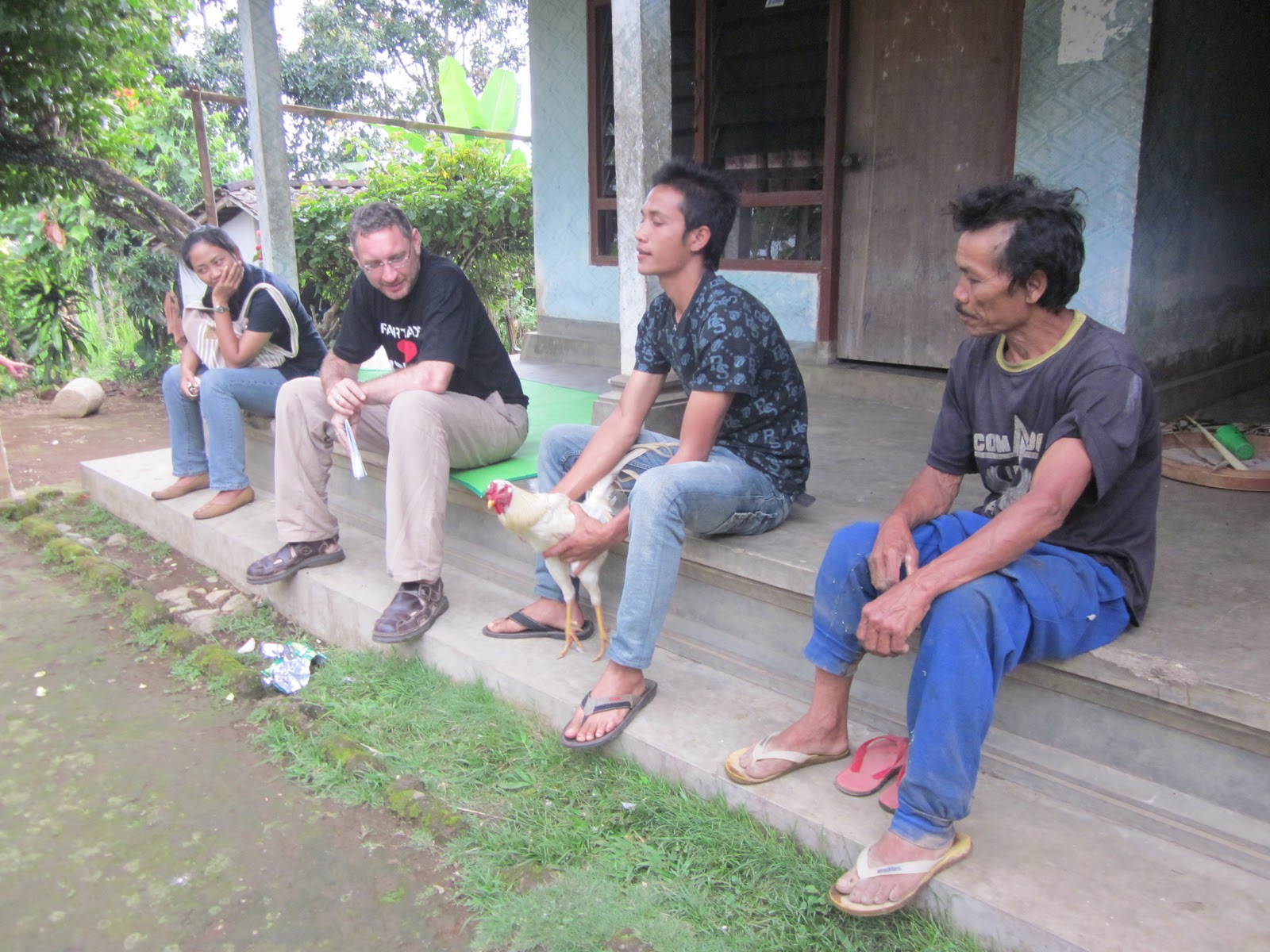
 
Diawain is a 25 year-old artisan in the serene village of Punduh Nengah nestled in the mountains of Bali. He shared his views when we visited the ongoing resource management and community development programs initiated by Mitra Bali. “The impact of Mitra Bali in my community has been in the environment. We now manage the trees and educate children about nature in schools. We also separate the biodegradable materials from our garbage. To me, Fair Trade teaches respect to the environment and wise use of wood resources. Socially, it promotes sanitation like clean toilets, provides support for our traditional ceremonies and supports the ill. It teaches solidarity with commitment.”

Youthful ambitions can also be a gauge on the impact of Fair Trade in a community. I asked him what he wanted for his future and to this he replied with a smile, “In the future I want to be myself! I want to share my knowledge with others in my community about the principles of Fair Trade. I also want to a computer so I can learn from the internet; there isn’t much interest in computers here.” 


From Bali, we went to the island of Lombok where we met the women potters of the Lombok Pottery Center. Here we happened to arrive on the day when the year’s dividends are handed out to the members. We found ourselves in a festive atmosphere with the Director, Ms. Rohmiati, as the women of each cooperative gathered together for this annual event. Normally pottery making is a home-based activity, so this is a special gathering of friends and potters on a day of recognition. For Chou and I, it was an opportunity to witness the gathering and excitement surrounding the event. Unfortunately, there was little time for interviewing members as they quickly returned home, financial rewards in hand, to prepare for Maulid, a celebration of the Prophet Mohammad’s Birthday. 

Out of curiosity, I conducted an informal survey and found that most of the dividends were spent on children’s education and on purchasing special foods for Maulid following Ramadan. 

Fair Trade Embraces Long-Term Relationships with Communities

From Lombok we went to Yogyakarta where we met with Ashoka Fellow, Amir Panzuri, founder and Director of Apikri. His passion for Fair Trade is reflected in the artisans and communities his organization works with. 


An hour’s drive from the city we met Pak Kemiran, the Bobung Village chief. The village is well known for its traditional wooden masks and crafts, and the Mask Performance. Apikri started working with his village in 1990, soon after a bridge had been built over the river connecting the it to the highway. The village chief told me that before the bridge was built, the village was very poor and had only one bicycle. “No children went to school beyond elementary school. The houses all had clay floors and bamboo walls. Now all families have a motorcycle, children all complete high school and twelve have gone on to college including my daughter.” 

After twenty years of working with villagers, the impact of Apikri can be seen and felt directly. The village chief explained, “In 1990, people needed wood for masks and crafts but there was no money to plant trees, Apikri gave us alabache tree seeds.” A decade later this effort turned into the Village Replanting Program. 


“In 2003, all the people in the village made an agreement, if we cut one tree; we had to plant ten trees. Alabache trees are fast growing and can be used in crafts after 12 years. In our village there are 250 wood producers, 11 are traders who sell to Yogyakarta, Jakarta and Bali. Before the Village Replanting Program we had to buy wood from the outside. Many thousands of trees have been planted and seedlings are grown in the households.”

Continuing his train of thought he added, “There is an increased awareness of the environment. The alabache tree is good for fertilizing the land and decreases the land erosion and landslides. Keeping the environment is a value added activity for the family. Alabache trees are also good for building. Since working with Apikri, in our village there is a change in mentality regarding the environment and children… Before, many children worked to get money for school. Now children work on crafts but it is integrated into the school curriculum as a hobby to improve their skills so they can have an income opportunity after high school. It is all part of a school program to learn handicraft production. After senior high school many continue to make crafts.”
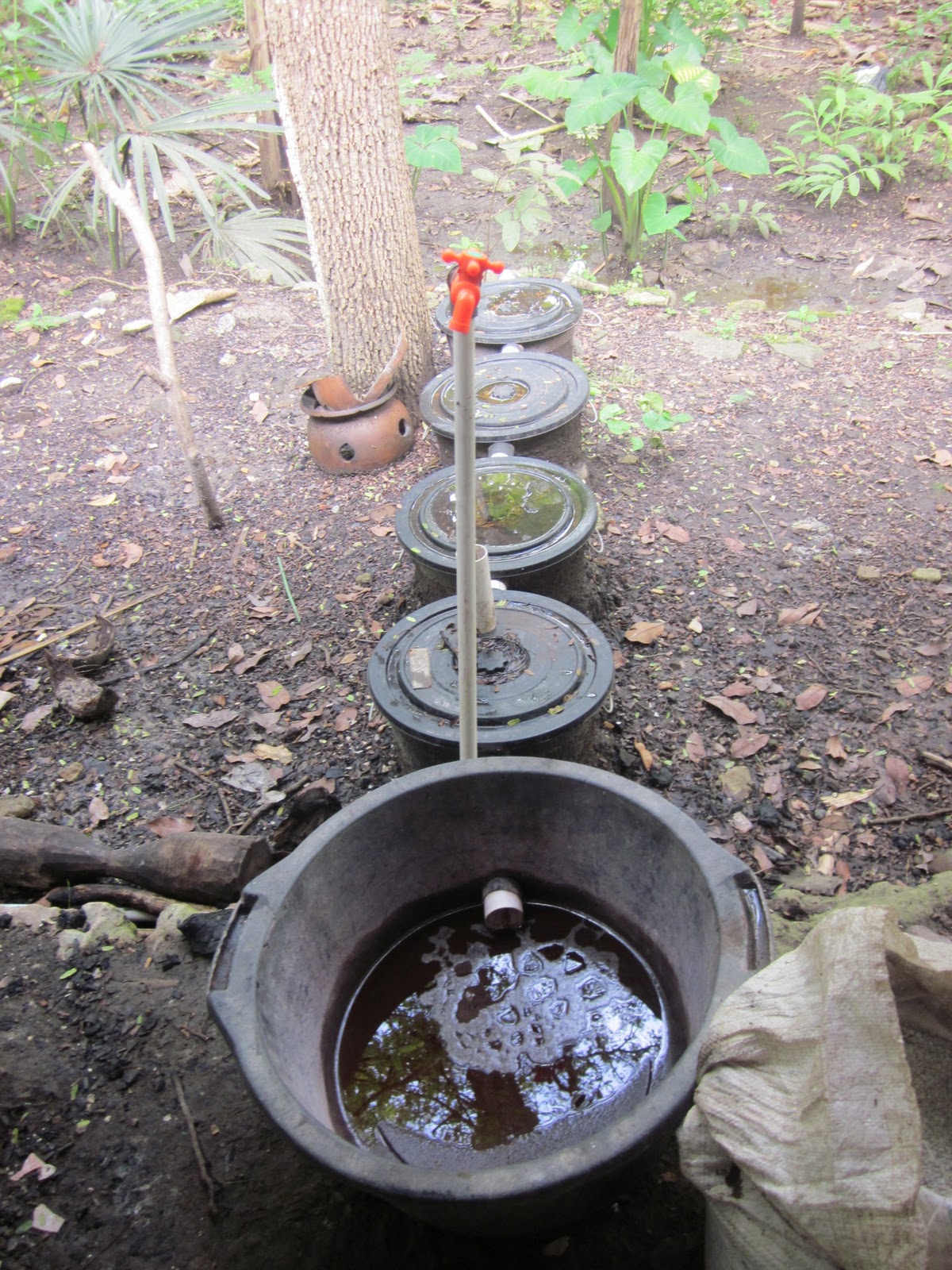

Walking up the road we came to the home and workshop of Mr. Supri a highly skilled Batik wood craftsman who has his own enterprise employing local craftswomen and men. Here we could see another impact Apikri has had on the community. A simple filter system removes pollutants and also allows him to reuse wax for batik design. “With Fair Trade I see that the focus is on the long-term relationship. I implement this principle with others I deal with because it works, and the prices are fair. I pay the artisans who work for me a fair wage, more than other companies. I don’t want to cooperate with low paying traders; by working with Apikri I have a good bargaining position. I don’t accept low offers, only fair prices. Working with Fair Trade I provide opportunity for workers who are usually farmers."

Mr. Pak Tukiran is also a wood craftsman in the village. He has received training in management and design from Apikri, and the impact it has had in his life has made him a firm believer in Fair Trade. In regards to his business dealings with Apikri, he stated, “I am included in decision making about products and prices. Prices are higher with Apikri.” He proudly added, “I have one daughter who has graduated college and is now doing her second degree in university. Our second daughter just entered the university."

During our visit we could see how the long-term relationship Apikri has fostered in Bobung Village has impacted the community, the environment and benefitted the next generation.

Fair Trade is about Personal Relationships

While in Yogyakarta, we also met with Novi Kusuma Wardhani, founder and Director of Java Ixora. Novi and her husband Dedi are energetic, creative and enthusiastic Fair Traders who are on the forward edge of the movement – watch for their involvement in the up and coming Yogya Fair Trade Movement!!  


Mr. Harsono is a reformed small business owner working with Java Ixora. He produces woven materials that are used in frames and mirrors designed by Java Ixora. By reformed, I mean that he owned a business that had collapsed, and like a phoenix rising from the ashes, Mr. Harsono has come to utilize an ethical business model after much reflection on his past practices. 

“Experience is the best teacher. Before I had a big business in crafts but it collapsed. I realized my business practices and methods were not right. I changed my approach to the workers and I changed my approach to the buyer. I realized craft production was my life and I needed to improve, to wake up. Now I use a better business approach. I focus on the personal relationships with the artisans. We provide them with a yearly bonus for the celebration following Ramadan. Also recycled materials are given to the artisans free of charge. If they get sick, we provide them financial support.

Lessons I learned from working with Java Ixora are how to do business with improvements, they motivated me to restart my business and provided personal support. They also taught me better ways to manage workers. My business relationship with Java Ixora is like family or a close friendship. There is a trust. Our relationship is more than just crafts; I have a personal connection that is more important than profit.

My wife also makes and sells food locally, baked goods.”

To this Novi added, “We also teach other income opportunities from different activities for when craft production is down.”

The focus on personal relationships could be seen in their friendly interactions with the men and women at the workshop. They also provide their workers with a lunch, which would normally cost about 25% of their daily wage. This added-measure benefits both him and his employees and sets him apart from other local employees who pay 25% less than his entry pay level. 


In an interview with Ms. Menik, a weaver for Gapuro Weavers, which also works with Java Ixora, we saw how the attention to personal relationships could be applied in a different profession in another community. Menik compared her experience with Gapuro Weavers in contrast to another textile company. “In the other workshop there was no continuous work to due to material availability. Now I am continuously working which greatly helps my income. I am happier here, the relationship with the owner is better, like family. I feel very close to them.” 

I asked her if she received a fair wage and she said, “I also receive a higher wage here and I get a bonus for textiles I produce when the owner makes a sale. If I need to take time off work due to illness, I get support to buy medicines.” To this she smiled and added, “Every year I also receive a bonus after Ramadan.” 

Her husband also works for a textile company, but it is not affiliated with Fair Trade. “Compared with my husband’s workplace, the management is much better here. There they have poor management because they have poor job descriptions. Each process requires specific skills, and here the job description matches the skills needed in the process; very precise.”

Maintaining social commitments; establishing long-term relationships to improve community well-being while taking measures to protect the surrounding environment; and the development of personal relationships with the producers are the hallmarks of Fair Trade in Indonesia.  

Thank you for joining us in this journey. It is my hope that this post will provide some insight on the application of Fair Trade and what it means to the producers of Indonesia. 
Feel free to post your comments, ideas or suggestions below. 

Sincerely, 

Mitch Teberg, MA


Monday, January 3, 2011

The Sound of Silence

As 2010 came to a close and the world welcomed the dawn of a new decade, I found myself pondering the purpose of my journey. I was reflecting on the intention of my journey as it is stated on the blog, which is, “to present the voices of Fair Trade producers, artisans, weavers, farmers, and craftswomen and men.” More specifically, I was questioning what to do with my latest findings.

I asked myself, What do I do when I go to listen to the voices of Fair Trade, but the voices are absent? By absent, it is not that they are missing as in people do not want to share their views on what Fair Trade means to them. Nor was there a lost in translation moment when confused glances are exchanged amongst colleagues and interviewees alike. Quite the opposite occurred, all the craftswomen and men whom I met were happy to share their stories and experiences. As a matter of fact, half of the group volunteered to share their life stories. The absence I ponder is much deeper and not readily apparent on the surface. 

In the process of my inquiry I found myself asking, what happens when, for no fault of their own, the very people who you go to listen to, don’t have an answer because they don’t know what you are asking?


Upon initiating this Journey for Fair Trade I had an email correspondence with Rodney North, the “Answer Man” of Equal Exchange. For over two decades this organization has been empowering farmers and producers through fairly traded coffee, tea, bananas and chocolate. He wrote of their experience in relation to my travels; “for what it’s worth – in our 24 yrs in the Fair Trade movement we’ve found that, by & large, individual farmers who are members of co-ops that export Fair Trade coffee or tea or sugar often have very little awareness of Fair Trade, and that this actually makes sense upon closer inspection. Conversely the professional staff of those same co-ops (the managers & other paid staff who process, market, export the coffee etc or do quality control and have regular contact with foreign buyers) often know much more about Fair Trade (as well about the other certification schemes their co-op uses – Rainforest Alliance, Utz, Ethical Tea Partnership, etc).

This lack of awareness by the co-op members will be lowest when their co-op only sells a small portion of its production to Fair Trade buyers and will be higher – usually – if the co-op sells a lot to Fair Trade buyers. Other variables will be how long the co-op has been selling to the Fair Trade market, how much of a price difference those Fair Trade sales make, and how much direct contact the co-op members have w/ Fair Trade buyers. Eg at a very remote/unvisited co-op the farmers/workers will generally have that much less awareness of Fair Trade.

To help increase the level of awareness of Fair Trade amongst coffee farmers in Guatemala we’ve given two grants to a non-profit, Cultural Survival, in recent years to produce radio programs on Fair Trade (& other topics) to be broadcast in multiple languages across a network of micro-radio stations in that country. To our knowledge this is a rare effort.

PS – check out the new book ‘Humanizing the Economy: Co-operatives in the Age of Capital’ by John Restakis – there is a section that looks at the Fair Trade experience of SOFA, a Sri Lankan tea farmer co-op
 
Rodney's understanding of the on-the-ground reality is similar to my own experiences. In my 2005 Journey for Fair Trade, I interviewed a Burmese woman who was residing in a refugee camp on the Thai-Burma border. When I naively asked, “What do you know about Fair Trade and sustainable development?” She frankly stated, “I don’t know much about Fair Trade, when I sell for 100 Baht and I get 100 Baht, this is fair.” I have learned since then to look for the indicators that reflect the established principles and the higher aims of Fair Trade rather than simply asking, “Are you empowered?” and “Have you been integrated?”  

He articulately explained the sliding scale of awareness of Fair Trade amongst Fair Trade producer groups. One vitally important point he presents is that managers & other paid staff who process, market, export the coffee etc or do quality control and have regular contact with foreign buyers often know much more about Fair Trade.” That is to say, they have a functional degree of knowledge of Fair Trade principles. 

Actually, he identified the very people who act as the lynchpin between the principles as they are viewed in the West and the local social, political, and cultural context of the producers, artisans, weavers, farmers, and craftswomen and men. The leadership of an organization is instrumental to the implementation of Fair Trade principles. Without them and their understanding, there will be a “disconnect” between what is agreed upon as a Fair Trade Organization (FTO) and what the reality is in a particular context. Stated directly, more weight is on the shoulders of these men and women than anywhere else in the Fair Trade movement.  

How do you check that they are passing on their knowledge, or utilizing the principles? This is exactly what I am doing in my journey – meeting with the producers to find out how those principles are viewed and applied locally. If a manager is not transparent or institutionalizes a discriminatory practice, the producers will be the ones to know firsthand. Most importantly, what I am searching for is the interpretation of Fair Trade principles and how they are applied in a local context. I can find these answers reflected in the lives of the people, their experiences in the organization, and within the community for whom they are working. 

Going deeper from this point is where it gets interesting… I found that the origin of a group can have a long-lasting influence in their incorporation and adherence to established principles. Two possible origins exist for producer group FTOs. Please note that the term FTO typically applies to all Fair Trade Organizations regardless of their location or function – a producer group in the South, or retailer in the North. For this posting, I use the term FTO only in reference to producer groups in the South.

Either an FTO arose from a grassroots movement with little to no external assistance; or an FTO was initiated or heavily dependent on an external effort, such as an NGO, a religious organization, or development agency. As a practitioner I have conducted the needs assessment of a community, and as a project designer I have been directly involved in the utilization of Fair Trade as a viable means to address those needs. 

I have found grassroots organizations which have researched and saw an alignment in their stated intentions with the principles established in Fair Trade are likely to be strong adherents and local advocates. A case in point is Binh Le, founder of Reaching Out in Hoi An, Vietnam who utilizes the principles closely and throughout his supply chain.

Organizations supported or established from the outside and managed by well-intentioned Westerners have an obligation to pass on the values and principles they espouse to the producers. Most importantly, they need to lead by example, to connect their actions with their principles. There is a need to empower people through capacity building at every opportunity. Encourage ownership! Take steps that lead to increased participation of producers. The little steps make all the difference. For example, involve producers in decision making processes and product design; find creative ways to conduct market research involving the producers; and foster a community spirit that is recognized in the local context. These are just a few ways to empower producers and facilitate ownership of the principles. 

Following my latest inquiry, I see the biggest obstacle an FTO setup and managed by outsiders will face can be the Western or Westernized managers themselves. For foreigners living abroad and in leadership positions it is all too easy to make the quick and ready decisions without producer participation; to design the products for replication in the workshop or on the loom; and to institute policies without passing on the values attached to the practices. After all, that is how it is done in the corporate world, and often times within the NGO sector despite their emphasis on participatory approaches. If they are not careful, they may end up neglecting the ultimate purpose of empowerment without intending to do so.

In my latest inquiry, it was not a grassroots setup, but one that was established by well-intentioned Westerners aiming to alleviate poverty through an income generating opportunity for a disadvantaged community. Before examining the organization, it is important to note the history and present social context in which it operates and the commendable motive behind establishing the organization.

The echoes of war, national enslavement to a twisted ideology, and systematic famine and murder on a genocidal scale while the world turned a blind eye for over three years has left another legacy on the people of Cambodia. This was followed by the duplicity of an international community which allotted Pol Pot a seat at the UN as the nation desperately tried to heal. The impact of all this exists deep in the personal narratives and life stories of Cambodian men and women which are inextricably interwoven with the collective experience of the nation. Betrayal, distrust, and inhumanity are very present in living memory. Such a legacy is a heavy burden for any narrative to carry. 
The Killing Fields were found throughout Cambodia

A traveler to Phnom Penh will immediately note the dire poverty and numerous beggars on the street with missing limbs and other deformities, reminders of war and disease that plague the nation. Pain, discrimination, inequality, and lack of opportunity are the hallmarks of the nation still today, thirty-two years after liberation. This despite the inflow of billions upon billions of dollars in foreign aid. A case could be presented here on the utter failure of developmental aid as it stands, but I will leave such an exercise for overpaid armchair analysts residing far from streets screaming of an obvious failure. 

Considering the context, it is quite apparent that simply having a job is a great opportunity in and of itself. But I have to ask myself, is this where it ends? Is Fair Trade just about providing an income generating opportunity in the midst of nationwide desperation? What about the lofty goals of promoting Fair Trade as a means to empower the disempowered and integrate the disenfranchised through trade designed to alleviate poverty, promote accountability, encourage gender equality, and protect the environment?

In a previous posting, I declared:

As I conducted the interviews I noticed a repeated theme which I was reluctant to admit at first, but then it became painfully clear. To generalize the more glaring of my findings, there was a complete lack of awareness of Fair Trade principles at all levels of the organization from producers to management and little-to-no empowerment of the producers. As Rodney North had pointed out, not knowing Fair Trade principles in detail is not an uncommon finding amongst producers, but for the new management and for those dealing directly with suppliers to be completely unaware, this was unacceptable. The implications became self-evident as I inquired further into the specifics.


Without going into the findings themselves here and now, it will suffice to say that there were areas in need of improvement in order to meet the Fair Trade standards. At the same time I had a responsibility to do something about the knowledge I had acquired. I also recognized that what I publish could be damaging to an FTO. I pondered what to do…

I sought counsel from a leading advocate of Fair Trade, Jeff Goldman of the Fair Trade Resource Network. He wrote, “As a multi-partisan educator in the FT movement, I think it is essential that we advocates learn from disappointments as well… I observe that Fair Trade often suffers from rose-colored glasses that don’t help producers when glossing over deeper needs and shortcomings of FT. The truth will set us all free…” To this he suggested I find “a constructive, nonpolitical way to share such experiences.” 

Jeff was absolutely correct in advocating for a positive learning opportunity. Furthermore, I owed it to the men and women who so readily shared their stories with me. To make matters worse, the organization is struggling financially as a result of the economic recession that has led to a decline in orders from the West. 

With that said, I couldn’t publish my findings directly, but I wanted to help present their case.

Fortunately, the major trade partner of this small producer group is a leading organization in the Fair Trade Movement in the US and is known to work closely with their producers! As a matter of fact, I saw evidence of this in my inquiry! The story surrounding the wood dryer the group had been supplied with was to ensure their products wouldn't arrive warped and contorted. It was good to see firsthand this type of practical assistance. This was a sign that the Western FTO had a vested interest in their trade partner and it gave me hope!

Standing outside the non-profit organization, interview notes in hand, I felt an obligation to make the findings known to the Western FTO so they can take measures to assist their partner. Simply stated, there was a need to conduct capacity building within the FTO in order to adjust existing practices. I made a detailed report of my findings in which I mentioned, “Principle eight, in relation to capacity building states, ‘Organizations which buy Fair Trade products through Fair Trade intermediaries in the South assist these organizations to develop their capacity to support the marginalized producer groups that they work with.’”

To mobilize those relevant trade partners, I met directly with the Chair of the Board of Directors and the young business adviser. They were both receptive to my sharing and the conversations that ensued left me uncertain that change was on the agenda. More importantly, they were concerned with the immediate survival of the group. In the meeting I emphasized my concerns were from a Fair Trade perspective and acknowledged the challenging financial situation the FTO was in and the limitations on funds. They were also concerned about the issues and the implications of the existing situation if it were left unchanged. However, their hands were tied due to the limited funds of their own with which to assist and the prospects of the FTO were in question as the financial situation was a primary concern.

In my report I acknowledged that the issues I found were primarily in-house issues, not meant for publishing at a time when survival was at stake. That is why I have removed the name of the FTO I speak of until this point. I have also neglected to name the trade partner and supporting organizations working with the FTO. At the same time and as Jeff stated, the truth will set us free.

With that in mind, I concluded my introduction to the report:

“As for publication of my findings on a blog or in other media... I will withhold my findings and will return… in an agreed upon time-frame to follow-up on (the) implementation of Fair Trade principles. I view this as an in-house matter that I came across in my research, and in-house it will remain so long as it is addressed. 

Thank you for your time and consideration of these matters. I believe now, in a time of global economic rebuilding, it is vitally important to uphold our commonly held principles.”

Although my post may close in the following paragraphs, 
     this inquiry does not end here.

Now I speak directly to the major Fair Trade partner in the West which has supported the organization all these years through trade: Despite good intentions, consecutive foreign and national managers of the past have neglected to empower these producers and the current management. This can be remedied. In my report I repeatedly point out, “There is no empowerment here.” If the organization were to close shop tomorrow you should know that those disadvantaged people which have been your trading partners, they will return to their villages the next day and life returns to the way it was before they came. Their lives will return to the same disadvantaged state suffering in dire poverty. As it stands, the producers may as well hang a sign on the door on the last day as it closes, “We were never here” because that is the impact Fair Trade has had beyond simply providing an income generating opportunity for a period of time. As an FTO in the West and major trading partner, I hope you can provide funds to build the capacity of your trade partner, but also know that your actions are on center stage -  as an independent researcher, I will return to this local producer group to review what has changed.

Considering an important aim of Fair Trade is the focus on long-term trade relations with small producer groups, I look forward to returning to find that you have followed your obligations under Principle 8: Organizations working directly with small producers develop specific activities to help these producers improve their management skills, production capabilities and access to markets – local / regional / international / Fair Trade and mainstream as appropriate. Organizations which buy Fair Trade products through Fair Trade intermediaries in the South assist these organizations to develop their capacity to support the marginalized producer groups that they work with.


Thank you for joining me in this journey. Feel free to follow this blog and to add your comments, ideas or suggestions as we go.

Sincerely,

Mitch Teberg, MA

Sunday, December 12, 2010

People with Different Abilities

Fair Trade principles begin with creating opportunities for economically disadvantaged producers. Why this is important should be self-evident, but all too often people forget or don’t understand what it is to be disadvantaged. This term is quite applicable in a multitude of communities. It applies to socially marginalized ethnic minorities in distant lands where the serviceable roads and public transportation is a low priority; it applies to young women who were trafficked across borders to serve in a ravenous sex industry that dehumanizes their very existence and upon escape from their captors, they return to their communities only to face insurmountable discrimination as they try to reintegrate and reclaim what was stolen; and it can be those members of every community, rural and urban, who are disabled and viewed as a family burden forever dependent on the goodwill and charity of others.

Since Thursday we have been here in Hoi An, Vietnam to visit Reaching Out, a craft shop in this quaint little tourist town best known for its deep roots as a historic trading post along the coast. There are no disabilities here when it comes to craftsmanship, rather the craftswomen and men have “different” and readily recognizable abilities. I have known about Reaching Out since 2007 when I came to meet the founder and manager, Mr. Binh. Before I go into the story of Reaching Out and its founder, I want to share with you the experience of the shop itself. 
When you enter the store you immediately sense a very positive energy. Customers are greeted by courteous salesmen and women who welcome you to the shop, and don’t interfere with your browsing. Every item has a fixed price – a store policy that averts the usual haggling over a few cents which occurs in the vast majority of craft shops. 


This is how I met Dung, a young man with an inviting smile and gentle character. He is one of those with a “different ability.” His confidence is revealed in his composure and comfort in speaking English with multitudes of international customers that enter the shop on a daily basis. He is not only knowledgeable in the crafts and the process on how each one is made, but he will gladly introduce you to the person who made it in the workshop at the rear of the store.


All around the store I recognized the signage pointing out the business application of Fair Trade principles. Here workers are paid a fair wage which they earn by applying their trade; just ask any of them as they diligently and happily go about their labors. A further inquiry will lead you to discover that not only do they produce the high-quality crafts on the shelves, but they are directly involved in the design. Everyone I meet here exhibits a pride of ownership in their craftsmanship with a keen eye for detail. The fact that 80% of the staff and producers in Reaching Out are “disabled” is a side note. As they see themselves, this is an ordinary company going about their business in training and employing people with different abilities. 


What does Fair Trade mean to the craftswomen and men of Reaching Out?

I sat down with Dung on Saturday to ask him a series of questions on my long list of indicators related to Fair Trade principles. Rather than diving right in, I started with, “What makes Reaching Out different from other companies?” He replied with a smile, “I like working here. Almost everyone is disabled and there is an understanding amongst all of us here. I make a living wage and I have a long-term contract with insurance. I work eight hours per day, six days per week.”

When he mentioned a ‘living wage’, I perked up. Europeans generally understand this concept, but most people in the US have not heard of a living wage; much less understand the difference between that and a minimum wage. I asked him what it meant to him. He smiled and said, “I have an independent life! I have money to spend, to eat and drink. I can support my family and I can save money too.”  

Listening to him, I could sense a feeling of pride in his voice that comes with a sense of responsibility and belonging. He continued to explain, “To give you a local context, most people in other companies work ten-to-twelve hours per day and they only get one or two days off per month. Work outside is without a long-term contract and they do not offer insurance. Most companies only hire during the busy season, but in Reaching Out, I have steady work and I can plan ahead.” 

Until recently, disabled people have been discouraged from marriage or having a family of their own. Dung is dating another saleswoman here, Lan Anh, and the two of them are planning to marry in the near future. To observe them interacting is to savor a period of genuine innocence. Their ability to make a living wage has encouraged them to do what had been taboo a generation ago. In this way Reaching Out has been successful in their approach to integrate the disabled into society. 

There have been many advances in the past decade in Vietnam in regards to the integration of the disabled population. The group leader for the jewelry and pottery section, Luu Van Hoa, explained that the state has been pro-active in the integration of people with physical and mental disabilities. This recent development has put disabled people as a top priority in the eyes of the state. Hearing this I am relieved to see state efforts to include the disadvantaged, it gives me hope that governments can recognize the unique capabilities of all of their citizens.

Hoa added, “Before there was no place for the disabled to work. Now they can choose their work. Now disabled people can get training in centers and integrate into society. Before disabled people didn’t have many friends or a job. Now disabled and normal people are the same. We have jobs and friends; we can marry, have children and support a family.” 
On Sunday morning, I met Hoa and his wife, Luu Hong Tram with their 18-month old daughter. Tram also works as a saleswoman in Reaching Out and is amongst the 20% who do not have a disability. Her role started out in sales and her responsibilities increased as the shop grew. I asked her to explain her perception of Fair Trade and she quickly listed off several points that she has personally experienced:

1.    A fair wage
2.    No discrimination, no violence
3.    Protection of women’s rights
4.    Equality between men and women
5.    The more responsibilities and work you do, the more you are paid
6.    Create opportunities to access training programs
7.    A steady job and income for everyone

I have worked as a trainer for women’s rights and in the utilization of United Nations Convention to Eliminate All forms of Discrimination Against Women (UN CEDAW) so I was interested in how Tram viewed the protection of her rights. “During my pregnancy I only had to work the day shift, so I could go home early and rest. When I had morning sickness I could take days off if I needed and still receive pay. The organization really understands women’s needs during pregnancy. After giving birth, I had 4 months paid maternity leave. From the 4th to 12th month, they let me work a split shift so I could go home at noon to feed the baby.” 


In the afternoon I was invited to Nguyen Duy Nguyen’s newly built home to visit him and his wife, Van. Building a new house is a strong indicator in Vietnam of holding a respectable position and having a reliable income. With room to grow they are planning to have a baby next year, and both hope it will be a girl. I was curious and asked why he wanted a girl, Nguyen beamed when he replied in English, "Because girls are lovely!" 


Van told me, “Like Tram, I will be supported during the pregnancy because we have health insurance. Normal people can take 4 months maternity leave, but as a disabled mother, I can take a 6 month paid maternity leave.” 

When I asked about the biggest changes in his life since working for Reaching Out, Nguyen proudly told me, “I started working here as a craftsman. Since that time I have been promoted to group leader of lacquer ware and handmade paper products. I have had a chance to take training courses in management skills. Now I have a deeper understanding of management.”

He went on to share about the personal impact it has had on him, “Because I have a stable income I feel more confident. I am more respected by people around me. Now I can help my family and the relationship with them is much warmer.” 

To this Van added, “When I go out I feel much more confident and happy because I am the same as everyone else now; I have my own job and steady income.”

Over the past few days I see that Reaching Out is empowering the disabled to lead normal, self-sufficient lives. However, the reality is much deeper. The impact the organization has had is in making them extraordinary. You can learn more about them on their website, http://www.reachingoutvietnam.com/ or better yet, you can visit them directly in Hoi An. Their crafts are also available online and they ship internationally.