Showing posts with label Vietnam. Show all posts

Thursday, March 8, 2012

International Women's Day: Gender Equity and Non-Discrimination

The Global Fair Trade Movement is founded on principles which can be viewed as a living document; a "life-form" that evolves and progresses with time. As members we are enabled to keep our movement relevant by periodically reflecting upon and revisiting these principles. In June of 2011, recognizing the importance of cultural influences, the WFTO improved Principle 3 on Fair Trading Practices:

Fair Trade recognizes, promotes and protects the cultural identity and traditional skills of small producers as reflected in their craft designs, food products and other related services.

On this International Women's Day, I propose two essential changes to Principle Six: Commitment to Non Discrimination, Gender Equity and Freedom of Association. 

Firstly, we have identified Non-Discrimination as a principle we abide by, however there has been an oversight in defining the term itself. As it stands, Principle 6 simply states, "The organization does not discriminate in hiring, remuneration, access to training, promotion, termination or retirement based on race, caste, national origin, religion, disability, gender, sexual orientation, union membership, political affiliation, HIV/Aids status or age." However, can we improve upon this single sentence; can we provide more clarity to answer the basic question: What is Discrimination?  

When an organization utilizes a Rights-Based Approach they recognize poverty as injustice and includes marginalization, discrimination, and exploitation as central causes of poverty. To integrate a Rights-Based Approach is to strengthen our trade partners not only in trade relations, but in their quality of life; to enjoy the freedoms internationally recognized as inherent to all human beings. Isn't this what we want for our producers?

Admittedly many corporations around the world have incorporated policies to clearly define this issue and it is time the Fair Trade Movement does the same. However, we can do much better than a providing a corporate framework or dictionary definition of discrimination. If we integrate a Rights-Based Approach to Fair Trade, we don't need to look far in order to find a fitting definition which can be readily applied. 

 
The United Nations Convention on the Elimination of All Forms of Discrimination Against Women (CEDAW) is the convention with the most signatory nations of all the human rights treaties. Article 1 of this groundbreaking treaty presents a clear definition of discrimination which can easily be incorporated into our existing principles.
 
"‘Discrimination against women’ shall mean any distinction, exclusion or restriction made on the basis of sex which has the effect or purpose of impairing or nullifying the recognition, enjoyment or exercise by women, irrespective of their marital status, on a basis of equality of men and women, of human rights and fundamental freedoms in the political, economic, social, cultural, civil or any other field.” 
 – United Nations Convention on the Elimination of All Forms of Discrimination Against Women,
Article 1

 
Let's break this down more carefully to clarify what this Article is stating; to examine to actions, conditions and impacts that define discrimination:
  • The term “discrimination against women” shall mean
  • any distinction, exclusion or restriction made on the basis of sex which has the
  • effect or purpose of
  • impairing or nullifying the recognition, enjoyment or exercise by women,
  • irrespective of their marital status on a basis of equality of men and women,
  • of human rights and fundamental freedoms in the political, economic, social, cultural, civil or any other field. 
 
We can clearly see that this definition looks at impacts far beyond hiring, remuneration, access to training, promotion, termination or retirement. In fact, it looks at the restriction of women's human rights as a means to determine if an action is discriminatory.

Discrimination defined in CEDAW is clear, and easy to understand. Unfortunately the wording of Fair Trade Principle 6 fails to recognize the many forms of discrimination:
  • Direct or Indirect (Intended or Unintended) – Indirect includes a neutral law which has the effect of discriminating
  • In law (de jure) or in practice (de facto)
  • Present or Past/Structural, which is to say "historical discrimination"
  • In all fields (civil, politcal, social, cultural, economic)
  • Inter-sectional / Multiple Discrimination
 
By clarifying inter-sectional, CEDAW recognizes that groups of women suffer multiple discrimination based on additional grounds such as:
  • Race or Ethnicity
  • Religion
  • Disability
  • Age
  • Class
  • Sexuality
Why is incorporating this definition important?
Considering a majority of the global inhabitants (51%), and a majority of Fair Trade Producers are women who experience various forms of discrimination on a daily basis, the Fair Trade Movement must take a more active role in eliminating discrimination against women. We can also broaden this definition to include discrimination based on race, caste, national origin, religion, disability, sexual orientation, union membership, political affiliation, HIV/Aids status or age.

For the sake of clarity, I propose rewording of the Principle of Non-Discrimination in such a way as to integrate a Rights-Based Approach to our work: 

The organization does not discriminate in hiring, remuneration, access to training, promotion, termination or retirement. The term “discrimination” shall mean any distinction, exclusion or restriction made on the basis of sex, race, caste, national origin, religion, disability, gender, sexual orientation, union membership, political affiliation, HIV/Aids status or age which has the effect or purpose of impairing or nullifying the recognition, enjoyment or exercise by anyone, irrespective of their marital status on a basis of equality of men and women, of human rights and fundamental freedoms in the political, economic, social, cultural, civil or any other field.


The second proposed change to our principle of Gender Equity is recognizing women's right to a Paid Maternity Leave


As it stands, our Fair Trade principle on Gender Equity does not recognize this right. As a matter of fact, it only recognizes pregnant women in one sentence, "The organization takes into account the special health and safety needs of pregnant women and breast-feeding mothers." Initially this point may seem unnecessary, or a Western luxury, but when we view this from a Rights-Based perspective, women are already entitled to a paid maternity leave and it is our collective duty to uphold this right. If we, as a global movement believe that we stand for the rights of women, we must insist all Fair Trade producers, buyers, exporters, importers, wholesalers  and retailers recognize women's right to a paid maternity leave.

United Nations Convention on the Elimination of All Forms of Discrimination Against Women

Article 11
2. In order to prevent discrimination against women on the grounds of marriage or maternity and to ensure their effective right to work, States Parties shall take appropriate measures

(a) To prohibit, subject to the imposition of sanctions, dismissal on the grounds of pregnancy or of maternity leave and discrimination in dismissals on the basis of marital status;
 
(b) To introduce maternity leave with pay or with comparable social benefits without loss of former employment, seniority or social allowances;
 
(c) To encourage the provision of the necessary supporting social services to enable parents to combine family obligations with work responsibilities and participation in public life, in particular through promoting the establishment and development of a network of child-care facilities; 
 
(d) To provide special protection to women during pregnancy in types of work proved to be harmful to them.
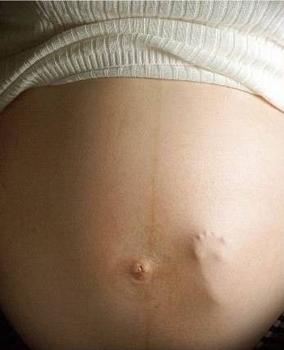

By incorporating a Paid Maternity Leave into our Principles we are not introducing a foreign concept, but integrating internationally recognized rights entitled to all women regardless of where they reside. 

Integrating Paid Maternity Leave with Fair Trade Producers

In 2011, while working with Helvetas Intercooperation, a Swiss NGO, in Vietnam we encountered a common practice amongst Small and Medium-sized Enterprises (SMEs). According to Vietnamese law, SMEs are required by law to financially support the women on maternity leave. This is done through purchasing a Social Insurance where the workers pay 8.5% of their salary and SMEs pay 20% of their pay for the triple insurance coverage plan. However, most SMEs do not purchase this insurance for their workers thereby cutting costs. The consensus amongst SMEs in Vietnam regarding maternity leave seems to be that women are entitled to an unpaid leave and many return to work afterwards. According to the law, those who don’t provide them with insurance must pay out of pocket the same amount for maternity leave. When women assert their rights to a paid leave, more frequently than not, they are fired without separation pay and not welcome to return to the position they once held. 

Helvetas wanted to integrate a paid maternity leave into the contract with producers, however, we quickly discovered a difference between the Helvetas standard of 6 weeks maternity leave and Vietnamese law. Maternity leave in Vietnam as per the Labour Law is:
  • Normal working condition: 4 months paid maternity leave
  • Hardship (rural / military / dangerous environment): 5 months paid maternity leave
  • Disabled women: 6 months paid maternity leave
 
Our predicament was to write a policy in the contract which can be implemented globally. Through dialogue and discussion with producers in Vietnam, we came to set a policy that is acceptable to both Helvetas and Vietnamese producers: 

Producer offers whichever is greater: a minimum paid Maternity Leave of not less than 6 weeks or what is established in the national labour laws, regardless of contracting status or time in employment; plus additional leave on an as-needed basis with a guarantee of resuming employment upon return.

So, in short, incorporating a Paid Maternity Leave is not only possible, it is essential. Without integrating this right, we neglect to uphold our responsibility to women worldwide.


Today I submit to you that Fair Trade, as a Global Movement, must integrate a Rights-Based Approach to strengthen our trade partners not only in trade relations, but in their quality of life. We can start through a comprehensive integration of women's rights into our principles of Gender Equity and Non-Discrimination. 


Sincerely,

Mitch Teberg, MA 
International Consultant
Sustainable Development / Fair Trade/ Women's Rights and Gender
Researcher / Trainer / Consultant   

Feel free to add your comments, thoughts or ideas below or catch me on facebook. For those who prefer reading black on white, here is the downloadable version of this post on pdf:

Tuesday, February 21, 2012

Human Trafficking - A Survivor's Story

In 2005, I had volunteered with the Vietnam Handicraft Research and Promotion Center (http://www.hrpc.com.vn/) on an Oxfam Quebec project in Hanoi, Quang Ninh and Ha Giang provinces. The project aimed to reintegrate survivors of human trafficking through skills training in handicraft production. Working with survivors gave me an opportunity to hear their stories of pain, betrayal, shame, and rejection (Journey 2005 - Cambodia and Vietnam).  However, it was their collective spirit that motivated me to support their cause. I suggested the name for their group be WIN since it represented their attitude, and the members really liked it.

In Hai Duong province, 2009, I conducted a month-long training program for Gruppo Trentino di Volontariato (GTV) from Trento, Italy, in a project where we replicated the successful aspects of the Oxfam Quebec project. This project was expanded to include domestic violence and impoverished women who were the head of households. In December, 2011, this group finally became an independent, self sustaining entity. You can connect with both the WIN group and the Kim Thanh Cooperative in Hai Duong through the Fair Trade shop at HRPC (Click Here)

A few months ago a friend, Luke Dale-Harris who works with the Centre for Women’s Development and the Peace House Shelter in Hanoi, had approached me inquiring of my experiences with survivors of human trafficking. I also put him in contact with a few people and organizations working in the field of reintegrating survivors of human trafficking in Hanoi. Most recently, in an effort to raise awareness of the tragic impact of Human Trafficking, Luke has written the following insightful article depicting a personal journey and attempts to heal:

*****

The jagged line that falters its way across the map, weaving over and around the contours that connect Vietnam and China, represents the border between these two countries to all, yet means distinctly different things to everyone. To the traveler it’s a challenge, the trader an opportunity, the farmer an inconvenience, the consumer an opportunity for cheap goods and the politician a threat. Yet when you reach it, at any point apart from the major border stations, it dissolves, like a mirage. You are left guessing at which country you’re in from the brands of motorbikes being driven and the writing on discarded noodle packets. The scenery is, of course, identical, while the people who move within it are often from the same ethnic group, wear the same clothes, live in the same style houses and speak the same language. 

Historically, the people of Northern Vietnam and Southern China have not been itinerant types, generally remaining tied to the land where they are born throughout their lives unless forced into movement by outside forces. Therefore, for many, this scar that runs through the middle of their land, dividing a people that it is largely united, is less important than you might imagine, lying beyond the peaks that mark the edges of the world they have carved for themselves. 

Yet the ever increasing amount of roads that cut through these mountains, steadily filling with larger, faster vehicles coming to and from far flung lands, suggests something else; not a world that has shrunk, as the imperialist’s cliché tells us, but a world that his infinitely expanded. The expansion has, in many ways, relieved much of the pressure of life in the rural border zones, some of the poorest areas in Vietnam, bringing money in through trade both domestic and international. However, with increased growth comes increased awareness, and the material inequality that lies at the heart of globalization soon becomes clear, often fueling desires less for social justice than personal wealth. If there’s any one law of global capitalism it’s that it’s a game for individuals in which nothing is out of bounds for trade.

Do, a 20 year old woman of Hmong ethnicity, is a resident at the Peace House shelter for former victims of human trafficking in Hanoi. Talking of her home town in the border province of Lao Cai she says that conditions have been going downhill in recent years for young women like herself as, though poverty is no longer a problem, they live in fear of being trafficked. ‘In my village alone quite a few people have been trafficked over recent years. To me, this is a sign that society is in decline. 

The official information and statistics available on the subject of trafficking in Vietnam is limited and as such it is difficult to gauge the exact extent of the problem, with the real figures being largely lost within the huge amount of unregulated emigration (between 30 and 40% of all Vietnamese emigration). Estimates vary hugely and what figures there are often say more about the attention the problem is being given than the extent of the problem itself.

Neither the UN nor the Vietnamese Women’s Union (VWU) could provide any reliable statistics and both pointed in the direction of Vietnam’s Ministry of Public Security who offer the often repeated figure that there were 2, 935 Vietnamese victims of Human trafficking between 2004 and 2009. However, this is hard to believe when the other available number is Hagar International’s estimate that there have been 400,000 victims since 1990. 

In talking to Madam Thuy, the director of the Human Trafficking department for VWU, it is apparent that even though the numbers aren’t there to prove it, the general consensus among experts in the field is one of apprehension that the problem is increasing and that, as Do mentioned, it is not as simple as just looking to poverty to explain it. 

‘Of course there are no solid rules as to what factors lead someone to becoming a victim of trafficking’ Thuy says, ‘though we do look for things they share in common to try and better understand the causes’. 

Although hesitant in citing these common factors, throughout the interview Thuy comes back again and again to the subject of family. She argues that it is the disintegration of this structure that lies at the root of trafficking in Vietnam, whether it results in kidnappings directly from the home, the selling of one’s relatives or the susceptibility of young girls to being tricked into leaving their homes, only to be kidnapped and sold. 

Ironically enough, in China it is often the demand for an ideal family model that fuels the industry. With the one child policy resulting in a preference for male children and subsequently a distinct shortage of girls available for marriage, both young women and very young boys are high in demand. As such, in contrast to the global trend in which girls are usually trafficked for prostitution and boys for labour, in the north of Vietnam they are primarily sold as wives and sons to Chinese families. 

At root though, there remain many similarities between the Chinese and Vietnamese family models. Both equally informed by the Confucian code, with its emphasis placed on hierarchical relationships and filial loyalty, the family remains the core social unit in each country. In Vietnam it permeates all areas of culture, through language, religion and politics; its influence inescapable.

It is, Thuy suggest, the clash between this familial tradition and the culture of individualism and opportunism inherent in modernization which causes much of the present tension in Vietnamese families. This same clash can go a long way to explaining the drastic measures taken to procure family members in China. 

Born into a Hmong family and the sixth of eight siblings, seven girls and one adulated son, Do’s future was in the making way before she was around to take any part in it. Although she talks of how she loved studying and dreamt of growing up to be a teacher, her parents had other plans and pulled her out of school at the age of 14 to get married. A complete education was reserved just for her brother, who, after finishing high school, went on to work as a local governmental officer. However, at no point in describing her childhood does Do reveal any resentment for either her brother or the decisions that her parents made for her, talking fondly of all her family and her brother in particular.

In hearing of the current trend which Thuy had earlier mentioned, that significantly fewer girls finish their education than boys, she shrugs and begins to talk of the man she married. ‘At first I didn’t like my husband. I didn’t even know him. He was just a friend of my brothers who my parents had chosen for me. However, when we were married and living together I quickly came to realize that he was a good man, just like my parents had told me. He worked in the fields with me and always worked hard. Never once did he beat or even shout at me.’

Four years into their marriage Do’s husband got kidney disease and within 3 months he was dead. Do was left alone with a ten year old daughter, a half built house and the bank pestering her for a debt repayment that she couldn’t afford. Shortly after his death she was robbed, the thieves taking many of the animals that were her livelihood and the pump which brought water to her home. ‘It was a terrible time for me and I was very afraid……. There are many thieves and drug addicts in my area. Without anyone to protect me and work the farm I felt I couldn’t survive.’ 

It is customary in Vietnam for the wife to move into her husband’s parent’s home immediately after their marriage, from then on living as part of his family. However, there is no such rigid tradition to determine what happens to the wife in the event of her husband’s death. The widow is not generally expected to go onto marry, and with their son gone, the incentive for his family to continue to act as host disappears. Do talks of a sense of hostility she felt from her parents in law in the months she was living with them following her husband’s death. With him gone they started looking to the daughter he had left behind, now the sole figure to carry on their family lineage. 
    
Hailing from the Kinh ethnicity, by far the largest and most powerful ethnic group in Vietnam, Do’s parents in law were determined to keep their granddaughter firmly within the Kinh tradition. ‘After my husband’s death his parents decided that they wanted to bring up my daughter on their own terms. They refused to let me take her back to my parents’ house.’ 
 
Determined to become financially independent so she could look after her child, Do took a job in a wood factory nearby where she was paid 2,000,000 VND ($100) a month. After four months though she fell sick and they fired her. She moved back home with her parents to work the field but, unable to make any money for herself she found herself living like a child again, separated from her own daughter and unable to take any part in her upbringing. 
 
It was at Tet, The Vietnamese New Year, when her cousin came back to visit from the provincial capital of Lao Cai where he had moved to find work. ‘It was a very bad time for me as I couldn’t afford anything for the celebration. When my cousin came though things changed. He was very generous and sympathetic and he gave me 15,000,000 VND ($750) to help look after my child.’
         
When he left and Do went back to working the field she began to contemplate moving to the city. ‘His life seemed so comfortable compared to ours where we have to work in the fields for long hours every day, are constantly tired and get almost no money for ourselves. I thought that if I moved to Lao Cai I could find the independence that I couldn’t get at home.’ 
  
More pressingly, the interest on the debt which her husband had left behind was piling up and she needed to find a job to pay it off. Lao Cai seemed to offer the opportunity to do this, find her independence again and raise enough money to give her child a good upbringing. 
  
She had been toying with the idea of emigrating for a while by the time her cousin returned one morning and offered to take her back to Lao Cai with him. She was to live with him and work as a shop assistant, doing reasonable hours and earning a high salary. The only catch was that they had to leave immediately. 
 
‘He told me that we had fifteen minutes before we must leave. I wanted to ask permission to go from my parents but he warned me that if I did so the position would be withdrawn. I had to come with him in secret. I agreed, taking nothing with me but a few clothes.’
 
In her family and parents in law’s eyes she had abandoned them and her daughter. In reality though, her cousin had promised that she could phone them when she got to Lao Cai and come back and visit whenever she wanted. It was later that day she found out this was a lie.
  
‘When we arrived in Lao Cai it was about 5pm. We had travelled there by motorbike but on the outskirts of the town we met with 3 Chinese men who took us to the centre in their car. We went to a restaurant where we had dinner and when we had finished eating my cousin told me that I must go with the Chinese men. Not knowing where or why I refused. He beat me for this. Later, around 9pm he took me to a bridge where he told me that if I didn’t go with the Chinese men then he would kill me and throw me into the river and then he would return to my village and kill my family. After some time of thinking I decided to go with them. I had no choice.’
   
From this point on Do’s tale reads like one of any commodity that is sold through an illicit market; she is carted around, repeatedly changes hands, stored away in small huts and put on sale at various markets. Every time she acted out she was beaten back into submission. Eventually she was bought by a 27 year old Chinese man who chose her for his wife from three other girls because, she claims, she was the healthiest looking, having been on the market for the shortest amount of time. 
  
It was only three months before she was bought home by Chinese police, in good health and of still stable mind. She is one of the luckiest.

Do’s story of being sold by a relative is in no way unusual in Vietnam. It is estimated that over 50% of victims are tricked into being trafficked by acquaintances of theirs, often friends, relatives or neighbours who promise work and a better lifestyle. They will make about $100 for the trade of a single woman.
    
When Do describes her cousin though she displays little anger, just a sense of surprise that he could have done this to her. ‘He was always close to our family, helping us work the land when he was younger and then receiving help from my parents later on when they gave him a plot of land and assisted him in farming it. I never suspected that he could be a threat to me.’ 
 
Neither Do nor Madam Thuy could give any insight into how someone could commit such a crime to someone they have known and loved, both resorting to just telling stories of other similar instances. 
 
Do talks of the many woman she knew who are now missing and of the mothers who have come to visit her since she returned in hope of finding some clue as to where their daughter is.
          
Thuy remembers a middle-aged woman who sold all four of her nieces in one go. 
    
However, when asked about how so few of the perpetrators go unpunished for their crimes, despite the high risk of trafficking an associate who often finds their way home, they have much more to say.
 
‘Many of the girls don’t dare go to the police’ Thuy says. ‘They are afraid of the consequences and they want to forget the whole thing’. 
 
Do explains. ‘In Vietnam the culture deems anyone who has been trafficked guilty. When I returned I felt like it was me who had committed a crime, I felt guilty for what had happened to me in China’.
 
Beyond this, the law refuses to recognize a victim’s verdict as sufficient ground for prosecution. Getting the police involved may cause a public scandal, bring attention to their situation and has no guarantee of success. In the rare cases the victims do go to the law the perpetrator often gets wind of it and escapes.
  
Returning home to shame, alienation and insufficient legal support, female victims often find themselves living alone and in poverty, struggling within the margins of a society that emphasizes the collective and abandons the individual. With little possibility of reintegration and the almost impossible prospect of making it alone, many of them go back into trafficking, though this time not as victims but as perpetrators. UN statistics estimate that as many as 70% of traffickers are women and that the majority of these are former victims. 
 
‘The reception of victims on their return into Vietnam is a major problem’ says Thuy.’ When girls come back to a family that rejects them and a society that judges them unclean it has both personal and practical consequences. They often lose faith in themselves and in need of money they fall into crime, most commonly trafficking.’  
 
Even for those who don’t go into the trafficking industry, the social stigma they face normally stops them talking about their experience and raising the awareness that is so crucial in putting a stop to the trade. Without a victim there is no crime and until the wrongs that these people face are recognized the self perpetuating cycle will go on and the industry will continue to grow. 
 
This is the issue that the Vietnam government faces today and, with the help of the many domestic and international aid programs, they have begun to make significant headway into tackling it. Focusing primarily on education, awareness raising and the rehabilitation and support of victims they are looking to make changes on a grass roots level, altering the stringent moral code that can act as the most effective weapon in preventing crime. With advice centers, shelters and school programs being set up in the most prominently affected areas, the reality of this international industry is beginning to be understood in the places where it all begins.  


Having been at the Peace House Shelter for over 6 months now, Do is beginning to consider leaving to find work and rebuild her life on her own. Taking a break from her tailoring class to give the interview, she sits cross legged over a cup of tea on the floor of her shared bedroom. Other women come and go over the course of the next two hours, each time with Do making sure to stop what she’s saying and introduce them. ‘These are my family now’ she says of the other residents, ‘and the saddest thing I have to face these days is seeing them leave at the end of their stay’. Offered a place in the shelter for as long as they want, the women usually leave after about a year, normally having learnt enough skills in their time there to go on and find a new line of work. Perhaps more importantly though each of them will leave with the confidence to take part in the world on their own terms, no longer a victim to anyone, least of all their own conscience.  
 
‘I have learnt since coming (to the shelter) that I have nothing to be guilty of. I am the victim, not the criminal. Now I know this I feel happy and positive about the future.’  

***


Luke Dale-Harris was born and raised in England until, after leaving university he moved to Budapest to work in an independent arts centre. A year later he moved to Hanoi where, amongst other things, he works with the Centre for Women’s Development and the Peace House Shelter. After three months of getting to know the residents at the shelter and researching Human Trafficking in Vietnam he conducted the interviews that resulted in this piece.

For more information on the Centre for Women’s Development and the Peace House Shelter go to: http://www.peacehousevietnam.com/

Feel free to add your comments, thoughts or ideas below. For those who prefer reading black on white, here is the downloadable version of this post on pdf:
Human Trafficking - A Survivor's Story

Monday, August 22, 2011

Should Fair Trade be Synonymous with Organic?

A small plot of shade grown, organic certified, Fair Trade coffee.
The farmers are members of the Arinagata cooperative in Ache,
Indonesia.Fair Trade cooperatives in Ache truly respect bio-diversity.
For so long I was a fence-sitter on this question regarding a Fair Trade product being 100% organic, not because I was unaware of the harmful effects of herbicides, pesticides, insecticides, and fungicides, but for more personal reasons. I had been raised in a rural community in the U.S. where farming was the life bread of the region and where corporations like Monsanto, Cargill and DuPont were viewed as important contributors to the livelihoods so essential to the local economy. On every farm you could see the seed bags and agrochemicals of the major corporations which had gained the trust of farmers for generations. Herbicide brand names such as Round-Up were as routinely used on lawns in town as they were in the fields that surrounded them. Although it has been over two decades since I have been back, I am certain it hasn't changed much and their corporate presence continues to be felt. 

As a matter of fact, as a child I spent many hot and humid summer days working on my cousins farm. Most memorable were the long hours with my cousins "picking rock" in the fields before plowing, and after planting came "spraying beans" with the latest version of Monsanto's Round-Up for $2 an hour (thirty years ago this was the going rate). The reward for our labors was the notorious "farmers tan" which glistened in the day's sweat when the summer sun branded our pre-adolescence, arms darkly tanned to where our t-shirts sleeves had been rolled up and where our necklines were exposed. Our tan was unlike the evenly tanned "city kids" who got theirs at the municipal swimming pool. 

On the farm we learned a hard-work ethic which city kids never understood at that young age. Your labor was your worth; for generations the farmers of the American Mid-West understood this and judged their kin accordingly. With this upbringing came an indoctrination into a way of life; I was a participant in this Rite of Passage and subject to the same evaluation of generations before me - "Is the boy worth his weight?" Once you passed, you had earned the trust of the family and the community.

In America's heartland, corporations like Monsanto, Cargill and DuPont had earned the trust of generations past and this has been passed on as a given; an unquestioned relationship. So deep was the trust, as handlers of these death dispersing chemicals we took no precautions; we never wore gloves or masks or protected ourselves from anything but the sun's rays, and that was only by force when caught  with our shirts off in the mid-day sun. 

I remember riding the bean sprayer - it was a tractor with a metal frame mounted on the front or back depending on the model, holding about eight seats straddling twenty-four rows - each rider was assigned three rows and as the tractor moved forward we used a long narrow sprayer to shoot the purple-dyed chemical concoction onto invasive weeds or the random corn stalk that sprouted up from last year's crop. When our attention drifted and our aim was poor, "Stop shooting the damn beans!" would be a quick reproach from the driver. When the driver's attention was elsewhere we took aim with our new-found weapons and shot one another leaving a deadly purple stain our victim. Of course we would be reprimanded for wasting it, but after a long day in the sun we still took a chance and took aim. We were kids, after all.

Don't get me wrong, I am not advocating child labor here. My drift down memory lane is relevant to my postulated question above because it provides an insight for Fair Trade advocates to understand: Farming isn't just a profession; it is a mentality, a way of life, and given that many Fair Trade products are linked to agriculture it is important to see that our decisions have more direct impacts on the lives of producers than simply as a means to alleviate poverty. 


Back to my initial question: 

Should Fair Trade be Synonymous with Organic?

I believe this is a central question for the future of Fair Trade. To begin, I would like to introduce an author which should be on the reading list of every Fair Trader regardless of where you reside: The Ecology of Commerce (the Revised Edition © 2010) by Paul Hawken. I have mentioned his work before, he is a renown environmentalist, entrepreneur, and visionary. The central tenet of his publication is the need for businesses and government to change the narrowly defined concept of commerce and in doing so correct our unsustainable, linear relation to the earth:

"We have an economy that tells us that it is cheaper to destroy Earth in real time than to renew, restore, and sustain it. You can print money to bail out a bank, but you can't print life to bail out a planet. At present we are stealing the future, selling it in the present, and calling it gross domestic product." 
 

Hawken points out that due to the wasteful and environmentally detrimental practices in the current economic system all life forms on the planet face serious consequences. Worse yet, consumers are insulated from this fact because, "The single greatest flaw of modern accounting is that the cost and losses of destroying the earth are absent from the prices in the marketplace." 

In agriculture one detrimental practice is the usage of herbicides, pesticides, insecticides and fungicides. As the Latin suffix -cida, implies, the sole purpose of their creation is to kill. The point that many people are missing is that soil is very much alive with an array of organisms that provide the life-giving nutrients needed to support plant life. 

Thanks to concerted efforts of the major agriculture corporations such as Monsanto and Cargill, mono-cropping is another detrimental practice eliminating diversity on factory farms and family run operations around the world today. Unfortunately in the US, most farmers emphatically embrace yet another detrimental agricultural practice: the heinous use of genetically modified seeds. GM seeds are bred to be resist specific chemical concoctions, such as Round-Up, a Monsanto herbicide. However, the life support systems in the soil are not resistant, hence the need to dump on chemical fertilizers to correct the devastation and soon farmers spiral into a nasty chemical dependency chasing after a nutrient balance that will remain illusive so long as the applications continue unabated.  

http://agentorangelegacy.blogspot.com/
Contrary to their short-term mission, agrochemicals continue to indiscriminately do exactly what they were engineered to do: Kill. 

In the chapter, The Creation of Waste, Hawken writes:

"When planes still swoop down and spray a field with pesticides in order to kill a predator insect, we are in the Dark Ages of commerce. Maybe one-thousandths of this aerial insecticide actually prevents infestation. The balance goes into the soil, into the water, into all forms of wildlife, and into us. What is good for the balance sheet is wasteful of resources and harmful to life...  

Whenever we introduce synthetic toxins into the biological process, regardless of the intent or original application, we are changing a cyclical process to a linear one... Nature's toxins - and there are many of them - have evolved over millennia as a part of complex, cyclical, life-giving cycles. Even if we imperfectly understand their purpose, in nature these compounds do not break the cyclical pattern of growth and evolution. Our man-made poisons, toxins, and chemical wastes have no such history; not only are they new to biology, but life has no place to put them. They cannot be taken up and incorporated by the normal metabolic processes of cellular life." 


Where do we see the irony of our destructive economic system as it stands?  Hawken's writes:
  
"The organic farmer who builds up soil quality, does not use pesticides or herbicides, and does not pollute groundwater, a steward who uses less energy to produce his crop, does not exploit migrant labor, does not leave half-filled tins of organophosphate pesticides in unmarked dumpsites, and who furthers genetic diversity in his seed stock. Such a grower cannot come to the market as cheaply as a factory farm."

There is a serious problem in agricultural practices when farmers have the same short-sighted values as investors on Wall Street. In the aptly named chapter, The Death of Birth, Hawken notes:

"Economists sometimes take the moral position that human life is superior to natural life, and there are environmentalists who take the opposite position. This is not a useful polarization. We can't turn our backs on the web of life that sustains us and live in a biological vacuum engineered by technology. Even if God did grant us dominion over life, I do not believe she had in mind the kind of stewardship we are practicing today. In the Old Testament, Eliphaz the Temanite admonishes a caterwauling old man by the name of Job: "Have you listened in at God's keyhole and crept away with his plans?" Job did not have  a convincing reply. Neither do we." 

http://organicconsumers.org/monsanto/index.cfm
While tinkering with the elements of life in strands of DNA, Monsanto's GMOs have been linked to decreased fertility, immunological alterations and allergies. Natural News.com (http://www.naturalnews.com/025001.html) wrote a short article on this linkage in 2008, "Objective and unbiased researchers have recently added to the growing knowledge of the realities of the increased instability and unintended consequences regarding the long-term safety of GMOs."

I believe the global Fair Trade movement must be informed about issues surrounding agriculture, particularly when multinational corporations are a driving force in our food supply. As advocates we need to not only know what Fair Trade stands for, but what it diametrically opposes and why. To view an informative documentary on Monsanto and their questionable history related to Genetically Modified Organisms (GMOs) and their history, polychlorinated biphenyls (PCBs), bovine growth hormone, suppression and manipulation of scientific data, Agent Orange and the US government's recurrent role in the Monsanto legend, take a look at this 2008 investigative video, The World According to Monsanto:


(http://youtu.be/YH4OwBYDQe8)

In addition to the exposé on this questionable corporation, after viewing the film I sensed that there was a distinct change in the relationship between the American farmer and Monsanto from the one I remember thirty years ago. A change from one of trust to one of fear of a corporation that divides communities. Unfortunately, Monsanto and their corporate compatriots did not draw the line at dominating the American food market, they have gone global. A Google search brought up a Monsanto office in Ho Chi Minh City, twenty minutes from where I currently reside.  

Since 2005, I have worked in rural villages of Vietnam as a consultant in Sustainable Development. In distant regions amongst ethnic minorities where corn is grown on mountainsides, I have repeatedly come across suspicious corn seed sacks and made inquiries with local farmers. I can summarize and paraphrase the many interviews here:

Do you plant this corn? Yes. 
Do you apply specific herbicides to it? Yes. 
Have you saved seed and tried to grow some of the same corn the following year? Yes, but the corn doesn't grow.

The genetically modified seeds I have encountered here have a suicide gene (again, there is that Latin suffix of death, -cida) to prevent  farmers from growing their own crops as had been done in past generations. Instead, these farmers living on $30 to $60 per month are now dependent on the corporation and have to purchase the seed / herbicide combo every year. Not surprisingly, my findings have been that the impact is not increased incomes from increased yields as Monsanto would like for us to believe. Quite to the contrary, the farmers I interviewed over the past several years experienced increased poverty, particularly when inflation is hitting averages of 12% or higher. 


To observe farmers spraying herbicides, pesticides, insecticides and fungicides in the field, it becomes apparent where the rise in cancers originate. They use hand sprayers and moving forward they spray in an arc, walking through the toxins as they go. At most, they wear long sleeved shirts and pants that are dripping wet by the time they finish.  

The Crawford Fund conducted a Risk Assessment to Human Health from the use of Pesticides in Vietnam in which they wrote, "It is clear that existing practices are poor and there is a substantial need for improvement. There was also information that deaths have resulted from pesticide exposure amongst farming communities. The other problem associated with pesticides in Vietnam relates to the pesticide and associated contaminants at former US Air Force Bases, and the implications for safe food production on adjoining agricultural land." (Both of which are directly linked to Monsanto) 

Vietnamese farmers are much like the farmers of other developing nations - they have easy access to agrochemicals, but low levels of awareness regarding health and safety practices in applying chemicals, or of the diseases linked to the ongoing usage of these deadly potions.

Let's return to my initial question because it involves more than agricultural products. Our decisions as consumers have direct impacts on the lives and livelihoods of families and on the communities in which they reside: 

Should Fair Trade be Synonymous with Organic?

In 2007, I was contracted by a UN organization to conduct a Social and Livelihood Needs Assessment of a famous traditional handicraft village in a farming community outside of Hanoi, Vietnam. Their specialty was rattan and bamboo weaving. To prepare the materials they used a chemicals known to cause cancer. In relation to the use of chemicals in making handicrafts, my report stated, "Considering its calm beauty, (this craft village) faces serious issues in this generation related to environmental pollution as a result of handicraft production. Currently there is no local intervention to challenge the social norms of careless disposal of chemicals directly into the canals that flow from the village and into the fields despite a moderate level of community awareness of environmental pollution."

Reviewing my field notes from one interview with a hamlet leader, I wrote: After use of acid and sulfur he disposes of it into village drainage. He estimates he uses 50kg/yr of acid (bought in powder form).

I was unable to ascertain the specifics of the chemicals he used, however my colleague was able to generate a list of chemicals commonly used in their handicraft production. What he found was typical of most cases. Due to confidentiality of the information reported, I have removed references to the name of the craft village: 

Several outlets for chemicals were identified in the vicinity of (the village). One of the outlets was a small shop located near the People’s Committee building. This shop only sells about 40 million VND worth (about US $2,200) of chemicals per annum. Small amount of sulfur, soda flake, silica, hydrogen peroxide and polyvinyl acetate were found on the premises. It appears that most of his stock is sold to small family producers. He has no information about how to process waste and only knows about using gloves with certain chemicals, information he received from his father.

A much larger supplier was found on (the Highway), several kilometers from (the village)... The wholesaler admitted to selling over 200 chemicals overall but was not able to provide a list. The list above was compiled from a physical examination of his stock. He supplies a number of industries (such as wood industry) in addition to the handicraft industry but the latter is his main market and in his opinion the market is growing. Apart from warning labels (a number of his products contained no such labels), he has received no information about the chemicals and no training on how to handle them or dispose of them. His buyers are apparently in the same situation as he is unable to pass on much information let alone training.
  
Additional field notes from an impromptu interview with the local nurse summarized the rising health problems faced in the craft village:
  • Respiratory problems from sulfur
    • Medicine ineffective
    • Both men and women affected
    • Mostly the individual who uses  the oven for material preparation
  • Long term affects are cancer and early onset of disease (16-18 year-olds, common)
  • Kidney problems from water pollution
  • Cancer is common
  • Main areas affected: throat, airway, lungs (inhalation) and eyes (blurred vision) and kidneys
  • Water filters are helpful, but only available to families that can afford
On a side note, you can imagine my disappointment when, in the final draft of the report, the environmental and health impact of handicraft production was categorically removed by the UN organization.   

Whether we are talking about the use of chemicals in production of Fair Trade coffees or crafts, is it worth the wanton destruction of the local ecology; the contamination of the local water supplies; and the personal suffering and financial implications of long-term illnesses all in our effort to alleviate poverty and empower the disadvantaged?  

I encourage your comments, thoughts and ideas below. I would also like to hear from the certifying organizations on their views regarding the future of Fair Trade. Note: I know full well this post does not address the how-to aspects; my intention is to simply postulate a question for Fair Traders to contemplate.

So I leave you with this simple, yet looming question for the future of our global movement: 
Should Fair Trade be Synonymous with Organic?

Mitch Teberg, MA

Shortly after publishing this post, I received a message from Kyle Freund, a Communications Officer for FLO - Cert. Admittedly, I am not certain why some comments are not being posted by blogspot despite my inquiries. After repeated failed attempts, with his permission I post it here:

Hey Mitch, Thanks for the post on Fair Trade and organics. I tried to post a comment and I'm not sure if you have it set to review before it goes live, but just in case, here's what I replied.

Good piece with good points and I'll be posting it on our Facebook page today. Funny to see it since I began editing a position paper about pest management just last week. We'll be putting out four papers in the coming months to explain our position on various environmental topics.

Thanks again. Oh and where did you grow up? That farm work comment at the beginning really hit home. I was in the same boat in Southern Wisconsin.

Cheers,
Kyle

Here's my comment I hoped to post:

Good entry and we're working on a position paper right now on Fairtrade and pest management. It will be coming out in the next week or two. (Full disclosure, I am a Fairtrade International employee, views expressed are my own.)

I think you hit on key ideas here and bring up great points. Responsibly and cautiously used, pesticides and agri-chemicals can help increase productivity, but the trade-offs or potential detrimental effects are great for farmers and their families, the environment and consumers. Plus any use of agri-chemicals increases community reliance on outside suppliers, which needs to be reduced. I think communities would be better off without agri-chemicals and ideally once involved with Fairtrade, communities that are not already organic will transition to more sustainable practices.

Fairtrade doesn't require farmers and workers to stop using pesticides, but the Standards do include a list of prohibited materials as outlined in the Pesticide Action Network Dirty Dozen List and a few other internationally recognized lists of dangerous chemicals. The Standards provide guidance on safe handling and usage. Fairtrade also has an organic differential for almost all products to encourage transition to more sustainable techniques.

With the recent publishing of http://www.fairtrade.net/single_view1.0.html?&cHash=4f6037645a&tx_ttnews%5Btt_news%5D=204 Fairtrade's New Standards Framework, a number of Generic Environmental Standards have been added. In the next few months we'll be publishing four position papers on Pest Management, GMOs, Climate Change and Biodiversity.

Side note: Reading your opening statement brought back a lot of memories of picking rocks and working all summer long (actually year round) on the family dairy farm where I grew up in Wisconsin
For those who prefer reading black on white, here is the downloadable PDF format: Should Fair Trade Be Synonymous With Organic